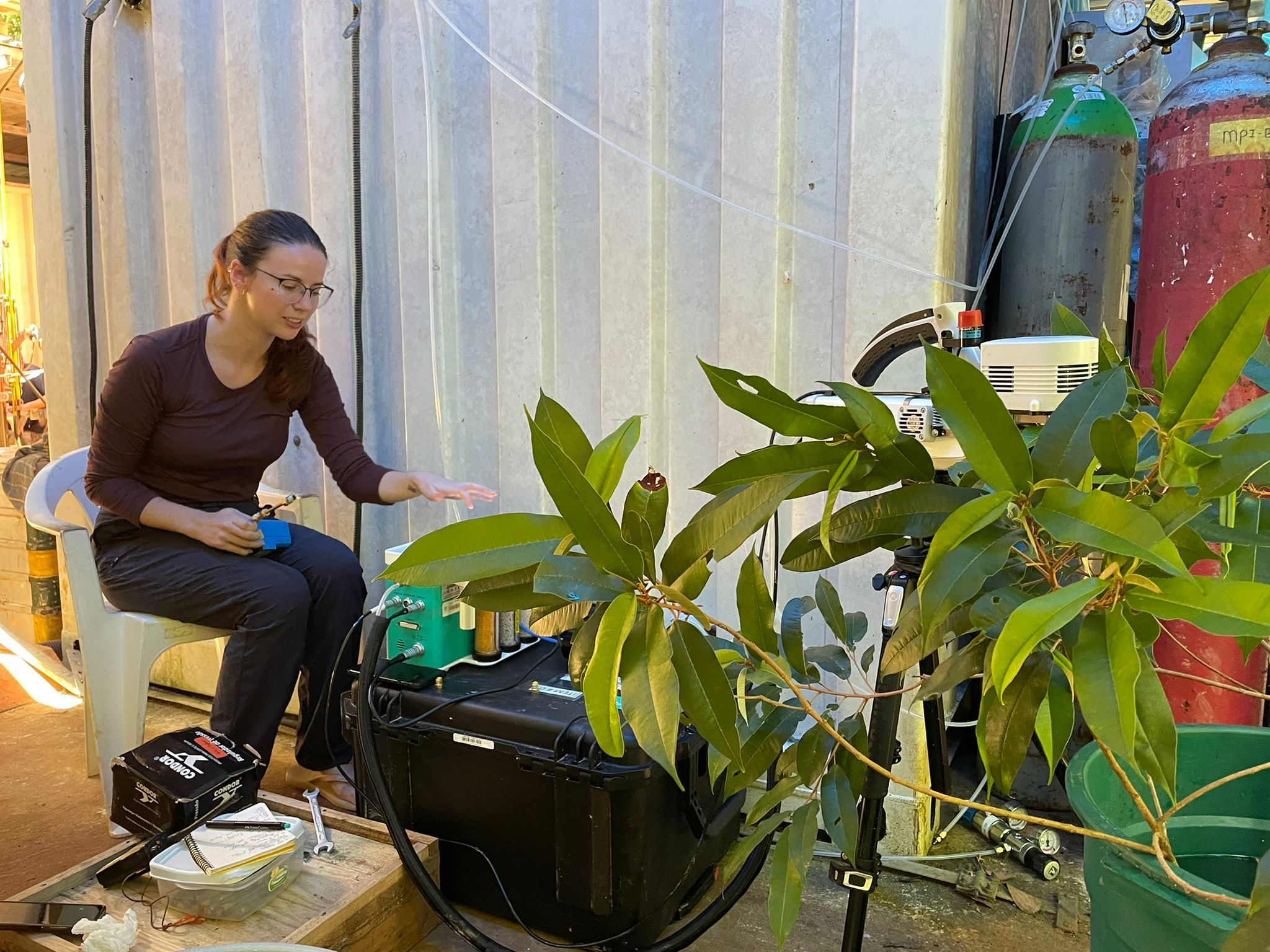
Tree leaves produce a variety of chemical compounds with the carbon they obtain from photosynthesis. Some of them evaporate very easily and are released into the air. Isoprene and Monoterpenes dominate the emissions of these so-called Biogenic Volatile Organic Compounds (BVOCs). Although invisible and sometimes even odorless, BVOCs play important roles. They help plants cope with stress, allow them to “communicate” with other organisms, and influence air quality and climate through chemical reactions in the atmosphere.
Tropical forests are especially important because they release more BVOCs than any other ecosystem on Earth. However, not every tree produces these compounds. We still don’t fully understand why some trees do and others do not, or why some release more than others. Such puzzling patterns greatly hinder the ability of models to predict emissions, especially from the extremely biodiverse Amazon rainforest.
Therefore, Michelle Robin and her colleagues wanted to find out whether emissions of isoprene and monoterpenes are linked to broader differences in how trees grow and use resources – known as “carbon economics strategies”. Some trees adopt a “fast” strategy. They invest all of their resources to produce leaves and stems that will allow them to grow quickly, but at the cost of being resistant. Others follow a “slow” strategy, growing more conservatively and investing in longer-lasting leaves and stems. Isoprene is a compound that needs little carbon and plants release it right after its production. So the team hypothesized that faster trees would favor its production. On the other hand, monoterpenes need a bit more carbon and plants can store it. So they hypothesized that slower trees would favor their production.
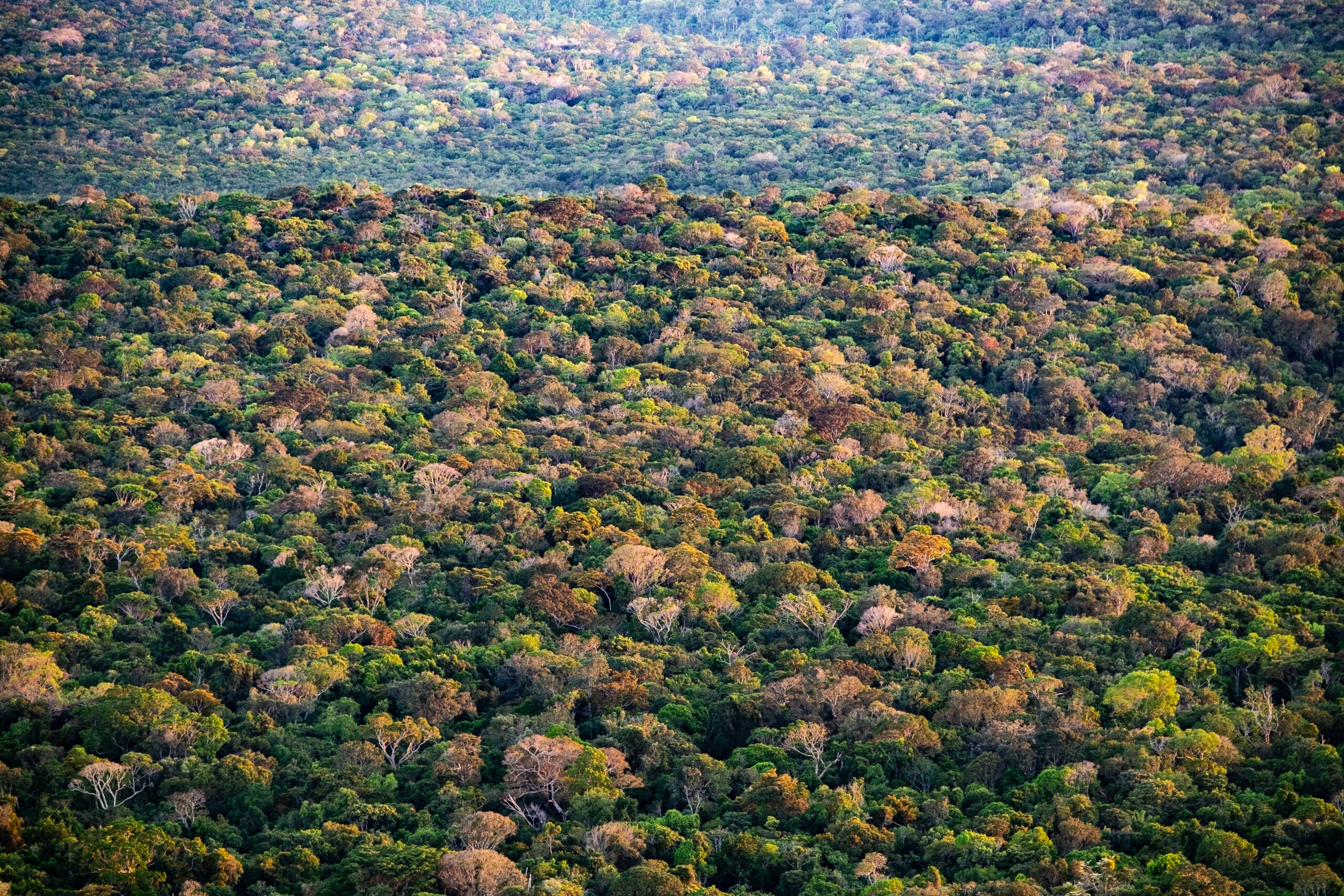
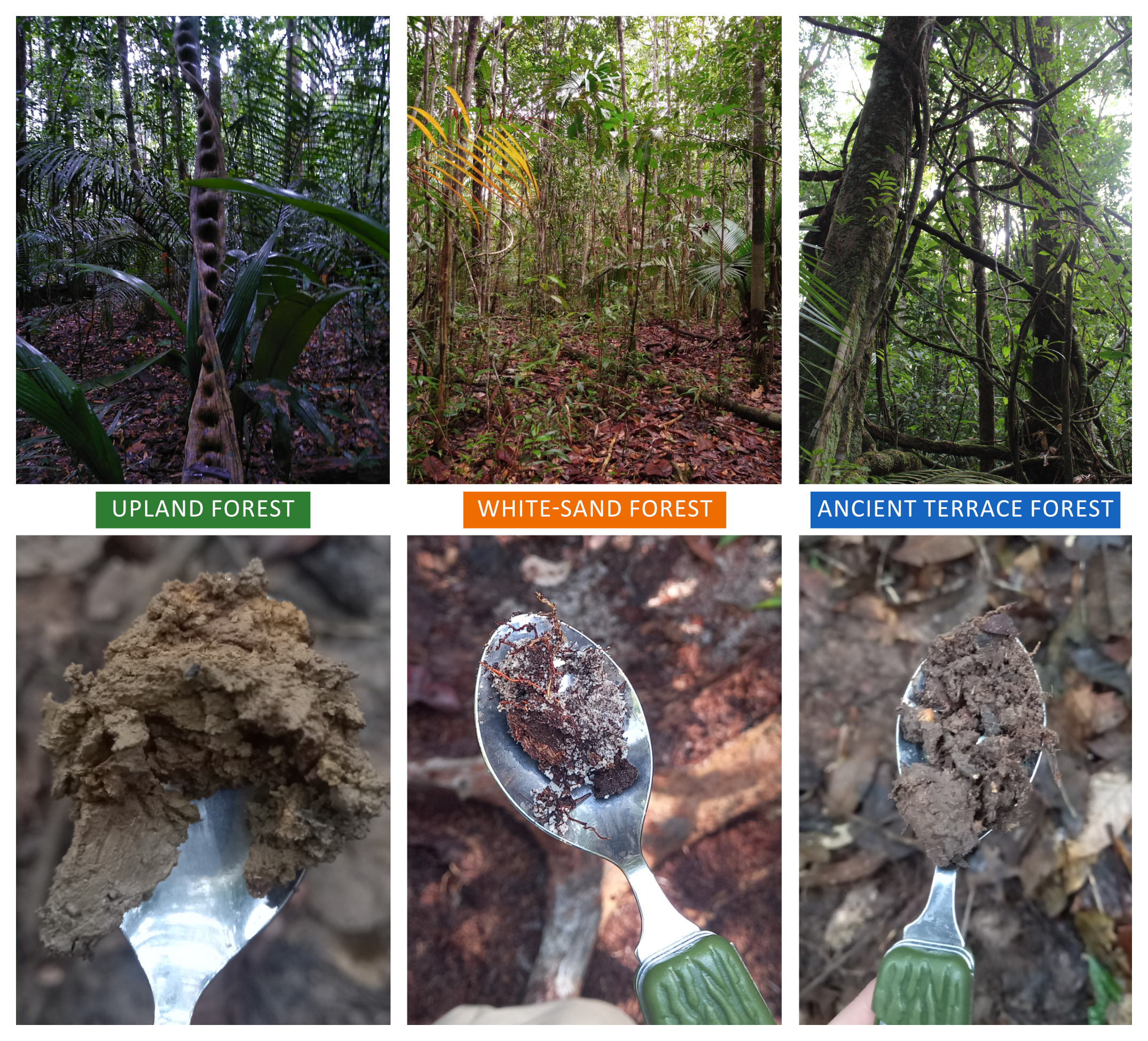
Robin and her colleagues studied trees distributed throughout three different environments in the ATTO site: upland terra firme forest, white sand campina forest, and non-flooded river terrace forest. They measured several characteristics of their leaves and stems to help determine which carbon economics strategies they followed. Then, they tested how their strategies varied with the presence and amount of isoprene and monoterpene emissions.
They found that emissions were indeed linked to carbon economics strategies but opposite to how they expected. Plants that grew faster emitted higher amounts of monoterpenes. Plants with slower, more conservative strategies, on the other hand, were more likely to emit isoprene and tended to release it in greater amounts.
Their results indicate that the plants’ strategies can be used to help better predict which and how much of these BVOCs trees in the Amazon rainforest emit, and how this can impact local and regional air chemistry and climate. In addition to that, the study also gives insight into how trees may respond to stress depending on whether and what compounds they emit, and how much carbon they are releasing into the atmosphere via these emissions. This is especially important in tropical forests, where plant diversity is extremely high and current prediction models tend to oversimplify differences between trees and species.
Robin et al. published the study “Leaf isoprene and monoterpene emissions vary with fast-slow carbon economics strategies in central Amazon woody species” in the journal Plant Methods.
Similar articles
Scientists measured carbonyl compounds in the atmosphere of the Amazon rainforest with the adopted instrumentation to separate aldehydes and ketones. They made some unexpected discoveries, showing studying the variety of carbonyl compounds separately is extremely worthwhile.

Direct measurements of OH radicals are rare and difficult to achieve. However, since they react with BVOCs, Ringsdorf et al. inferred them from isoprene measurements at ATTO. To do so, they applied a technique called ‘Dynamical Time Warping’ from the field of speech recognition. Akima Ringsdorf et al. published the study “Inferring the diurnal variability of OH radical concentrations over the Amazon from BVOC measurements” Open Access in Nature Scientific Reports.
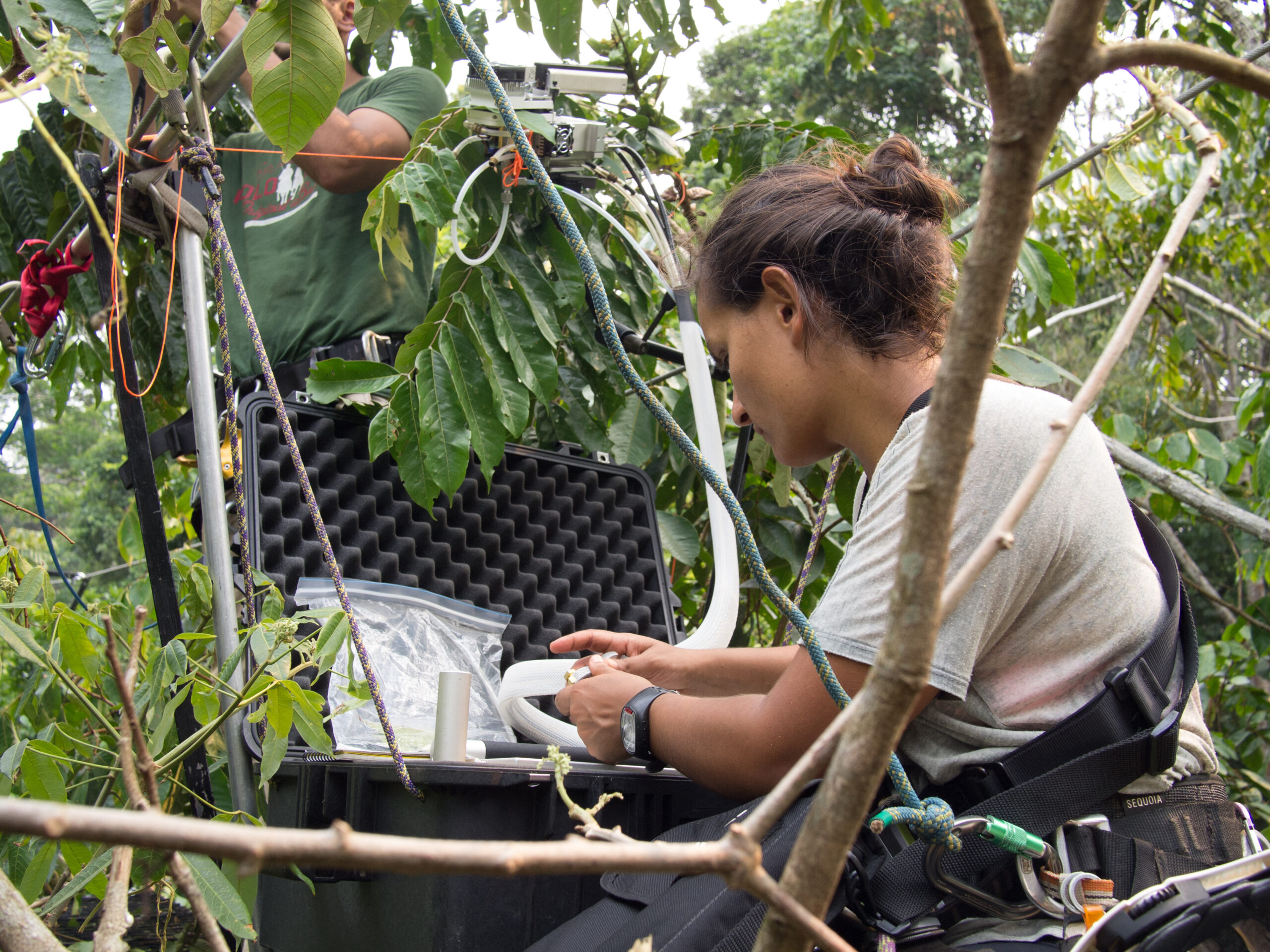
Eliane Gomes Alves and her colleagues measured isoprene emissions at the ATTO 80-meter tower across three years to better understand how these emissions vary seasonally and under extreme climatic conditions like El Niño events. They also looked into which biological and environmental factors regulate the emission of isoprene to the atmosphere.
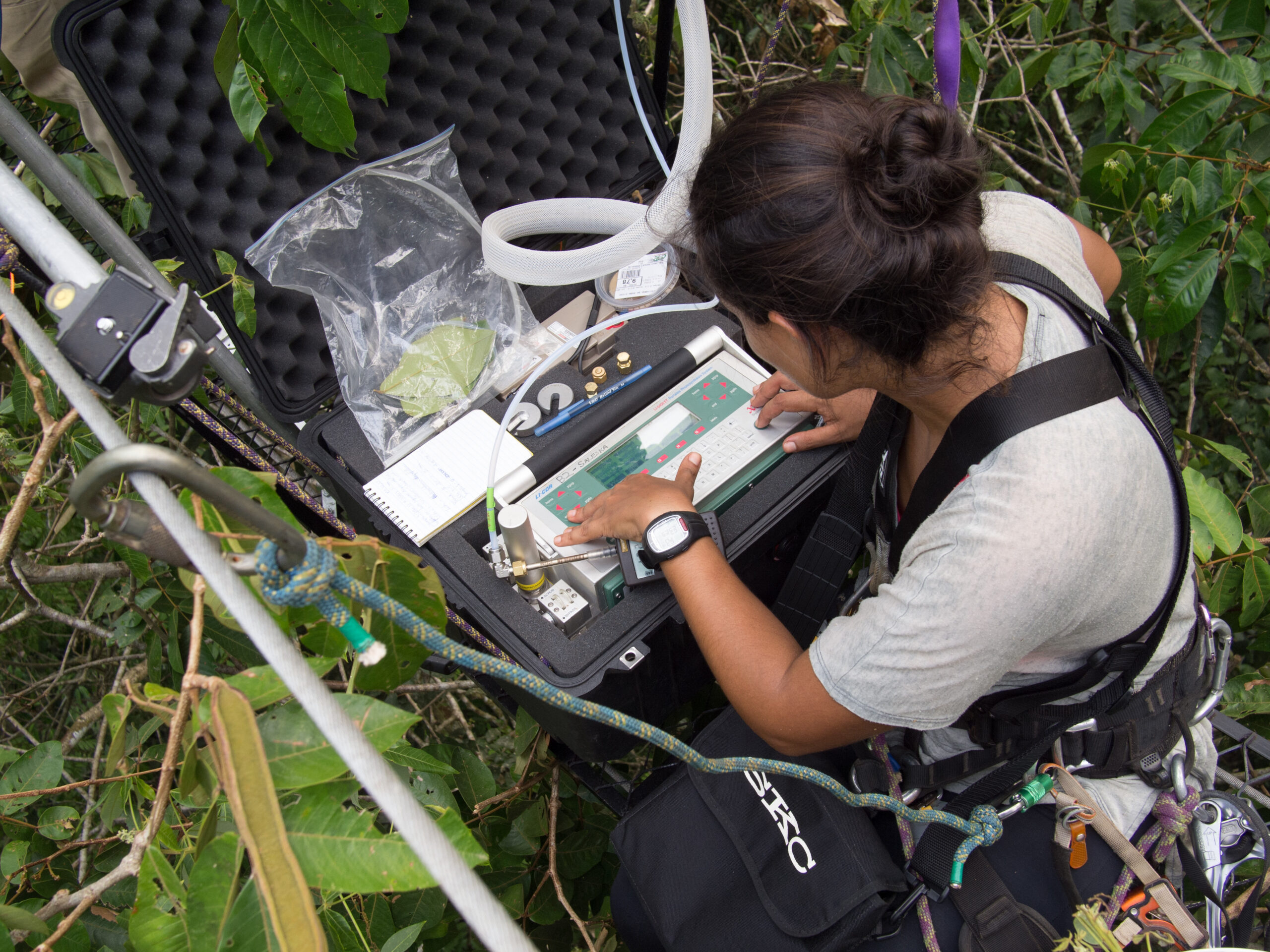
BVOC emissions in the Amazon have been studied for decades, but we still don’t fully understand when and under what conditions tree species or even individual trees emit more or fewer isoprenoids. To address this, Eliane Gomes Alves and her colleagues measured isoprenoid emission capacities of three Amazonian hyperdominant tree species.
Mosses and lichen appear to play a previously overlooked but important role in the atmospheric chemistry of tropical rainforests. A new study from Achim Edtbauer and colleagues shows that such cryptogams emit highly reactive and particle-forming compounds (BVOCs) that are important for air quality, climate, and ecosystem processes.
Biogenic volatile organic compounds remove OH from the atmosphere through chemical reactions, which affects processes such as cloud formation. In a new study, Pfannerstill et al. reveal the important contributions of previously not-considered BVOCs species and underestimated OVOCs to the total OH reactivity.
Nora Zannoni and her colleagues measured BVOC emissions at the ATTO tall tower in several heights. Specifically, they looked at one particular BVOC called α-pinene. They found that chiral BOVs at ATTO are neither equally abundant nor is the ratio of the two forms constant over time, season, or height. Surprisingly, they also discovered that termites might be a previously unknown source for BVOCs.
Fungal spore emissions are an important contributor to biogenic aerosols, but we have yet to understand under what conditions fungi release their spores. Nina Löbs and co-authors developed a new technique to measure emissions from single organisms and tested this out at ATTO and with controlled lab experiments. They published their results in the Open Access Journal Atmospheric Measurement Techniques.
Pfannerstill et al. compared VOC emissions at ATTO between a normal year and one characterized by a strong El Nino with severe droughts in the Amazon. The did not find large differences, except in the time of day that the plants release the VOCs. They published their results in the journal Frontiers in Forest and Global Change.