© Dr. Vinícius de Souza

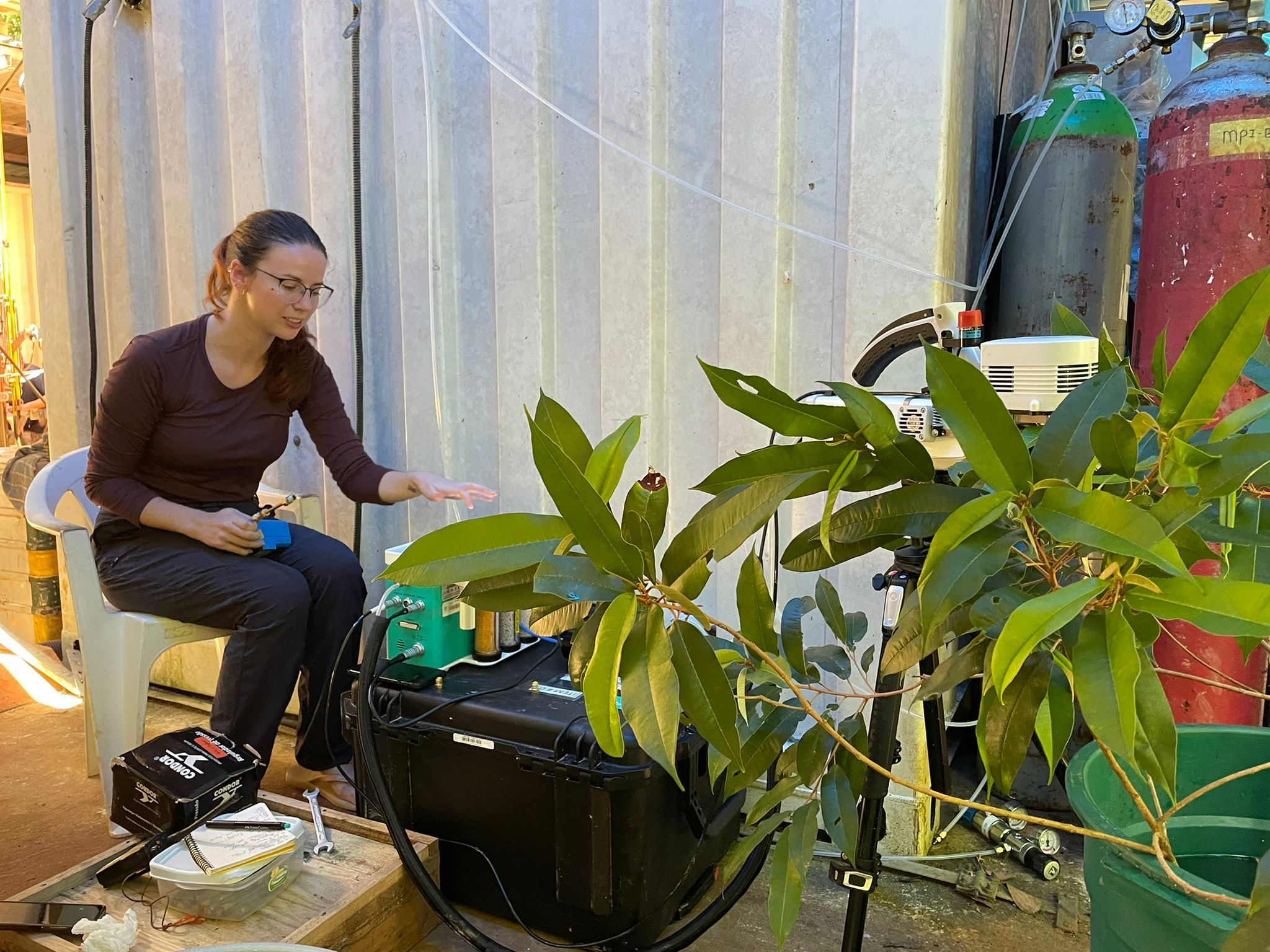
Scientists measured carbonyl compounds in the atmosphere of the Amazon rainforest with the adopted instrumentation to separate aldehydes and ketones. They made some unexpected discoveries, showing studying the variety of carbonyl compounds separately is extremely worthwhile.

Direct measurements of OH radicals are rare and difficult to achieve. However, since they react with BVOCs, Ringsdorf et al. inferred them from isoprene measurements at ATTO. To do so, they applied a technique called ‘Dynamical Time Warping’ from the field of speech recognition. Akima Ringsdorf et al. published the study “Inferring the diurnal variability of OH radical concentrations over the Amazon from BVOC measurements” Open Access in Nature Scientific Reports.
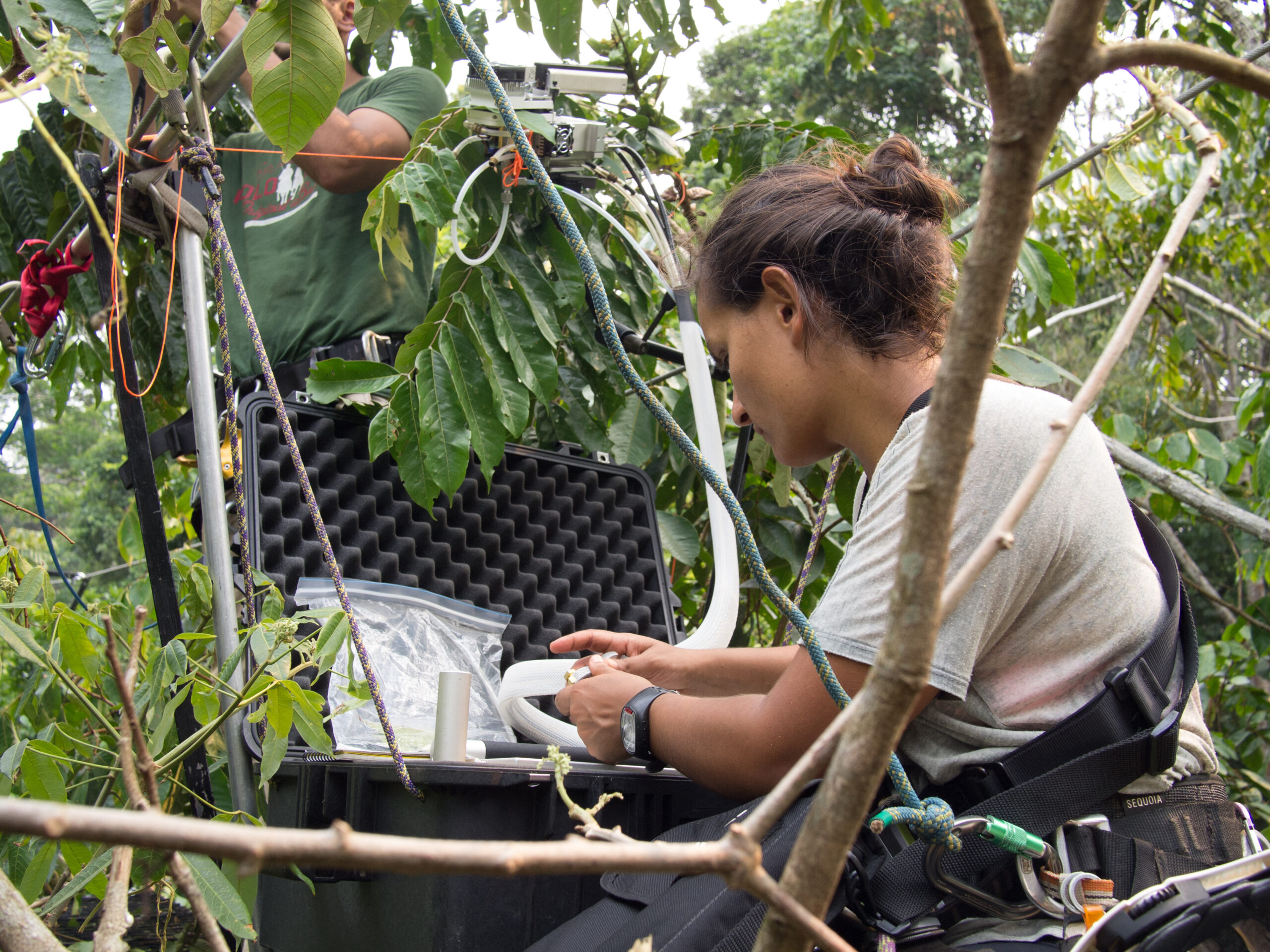
Eliane Gomes Alves and her colleagues measured isoprene emissions at the ATTO 80-meter tower across three years to better understand how these emissions vary seasonally and under extreme climatic conditions like El Niño events. They also looked into which biological and environmental factors regulate the emission of isoprene to the atmosphere.
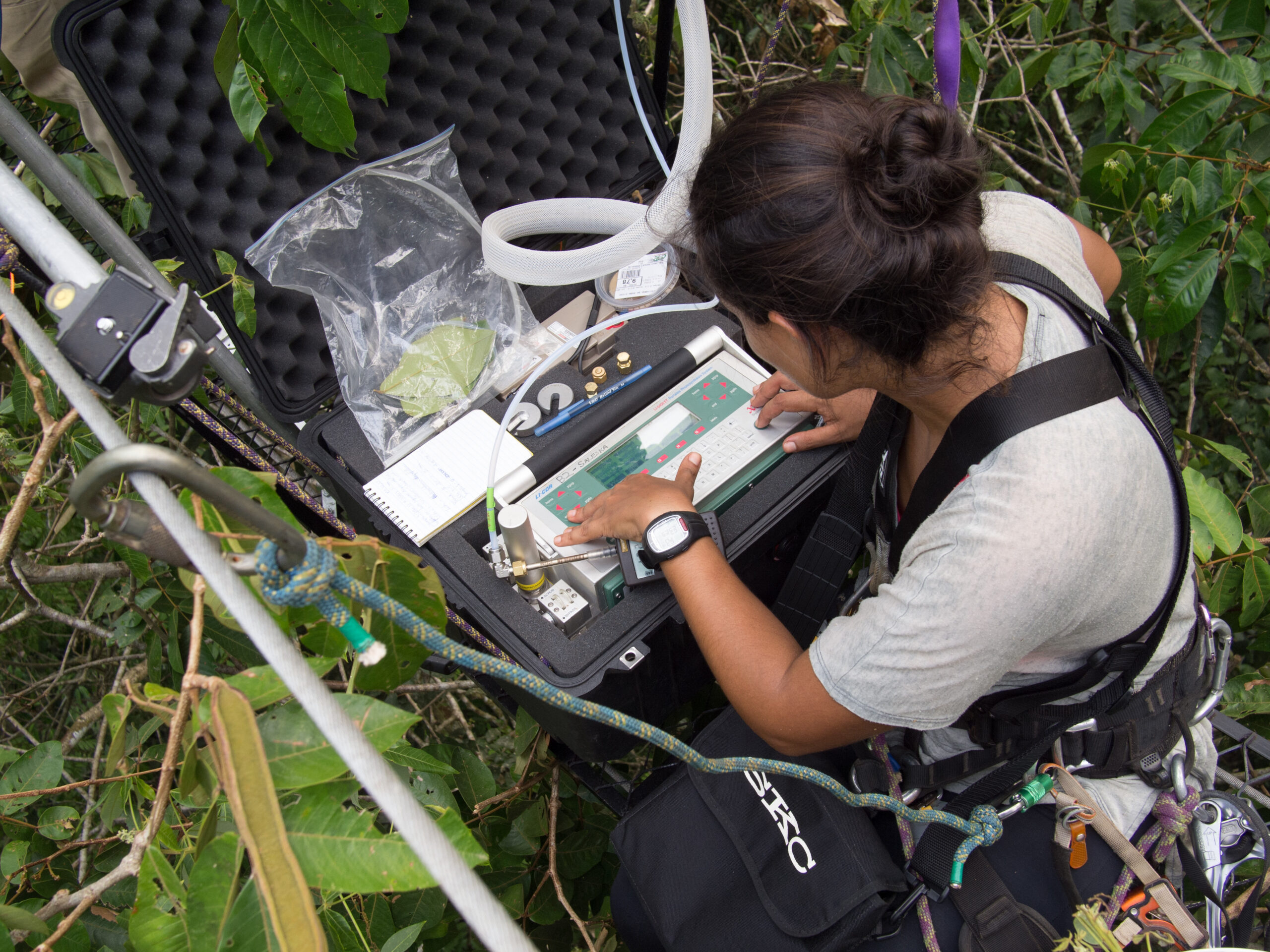
BVOC emissions in the Amazon have been studied for decades, but we still don’t fully understand when and under what conditions tree species or even individual trees emit more or fewer isoprenoids. To address this, Eliane Gomes Alves and her colleagues measured isoprenoid emission capacities of three Amazonian hyperdominant tree species.
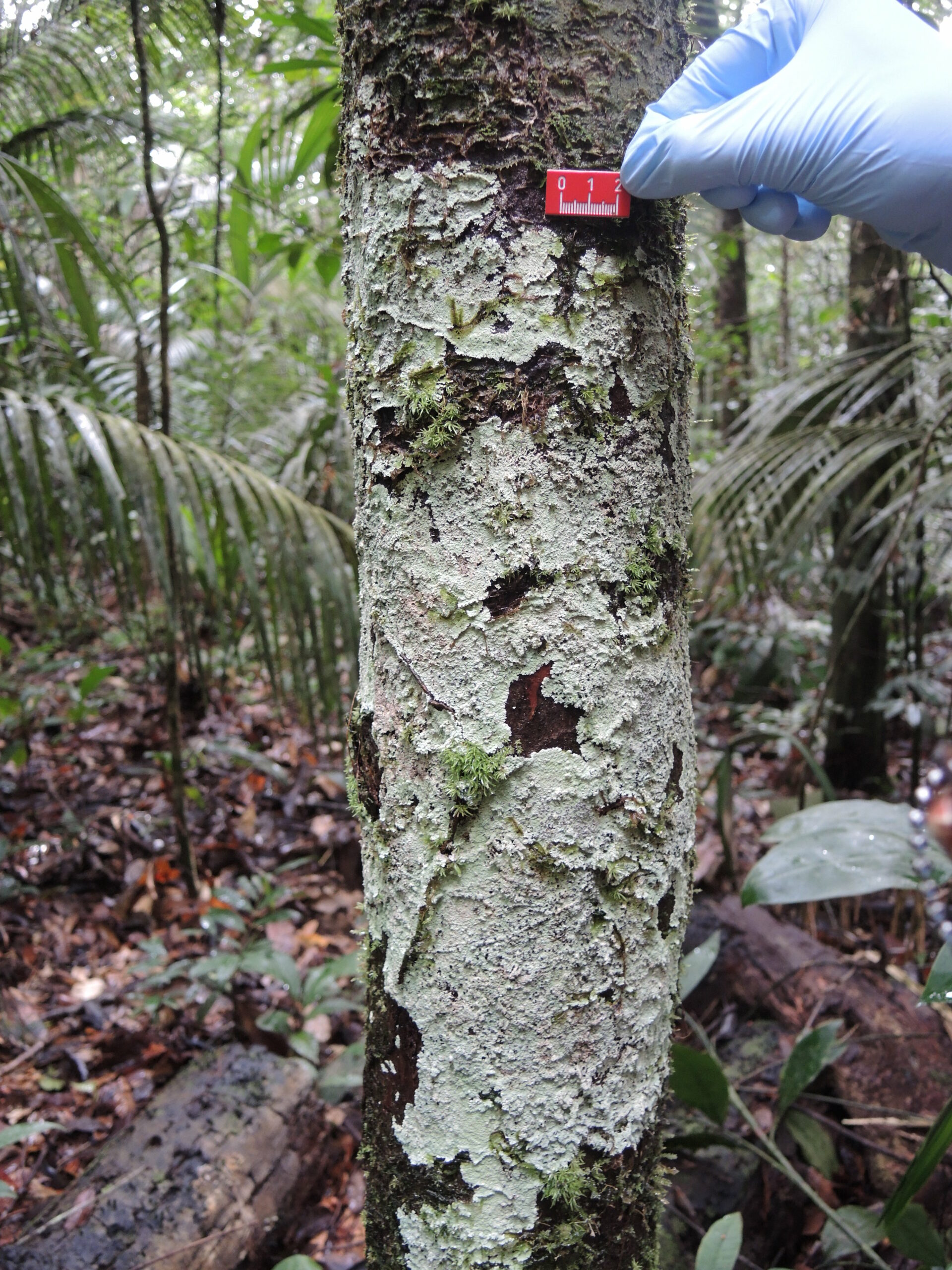
Mosses and lichen appear to play a previously overlooked but important role in the atmospheric chemistry of tropical rainforests. A new study from Achim Edtbauer and colleagues shows that such cryptogams emit highly reactive and particle-forming compounds (BVOCs) that are important for air quality, climate, and ecosystem processes.
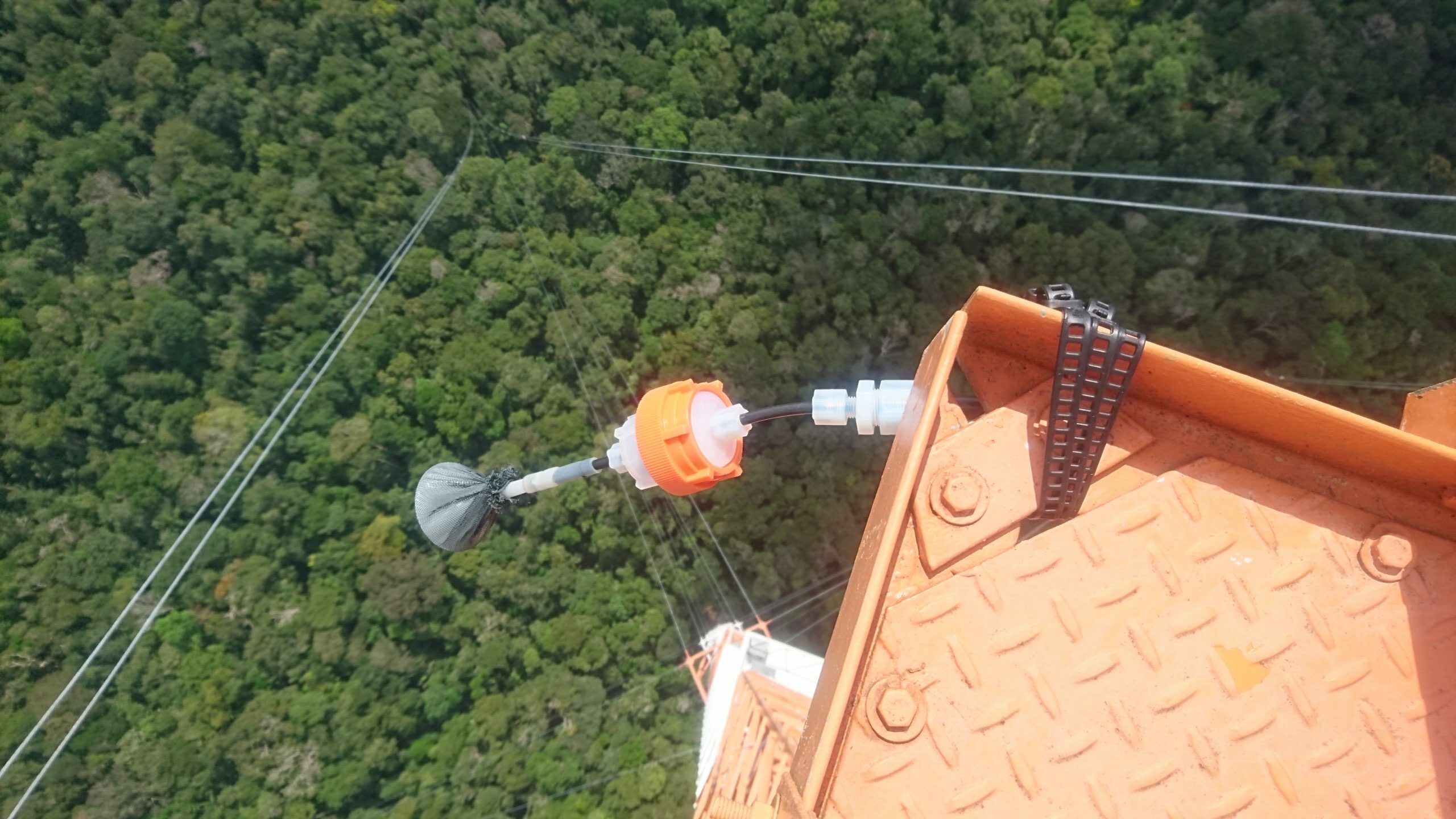
Biogenic volatile organic compounds remove OH from the atmosphere through chemical reactions, which affects processes such as cloud formation. In a new study, Pfannerstill et al. reveal the important contributions of previously not-considered BVOCs species and underestimated OVOCs to the total OH reactivity.
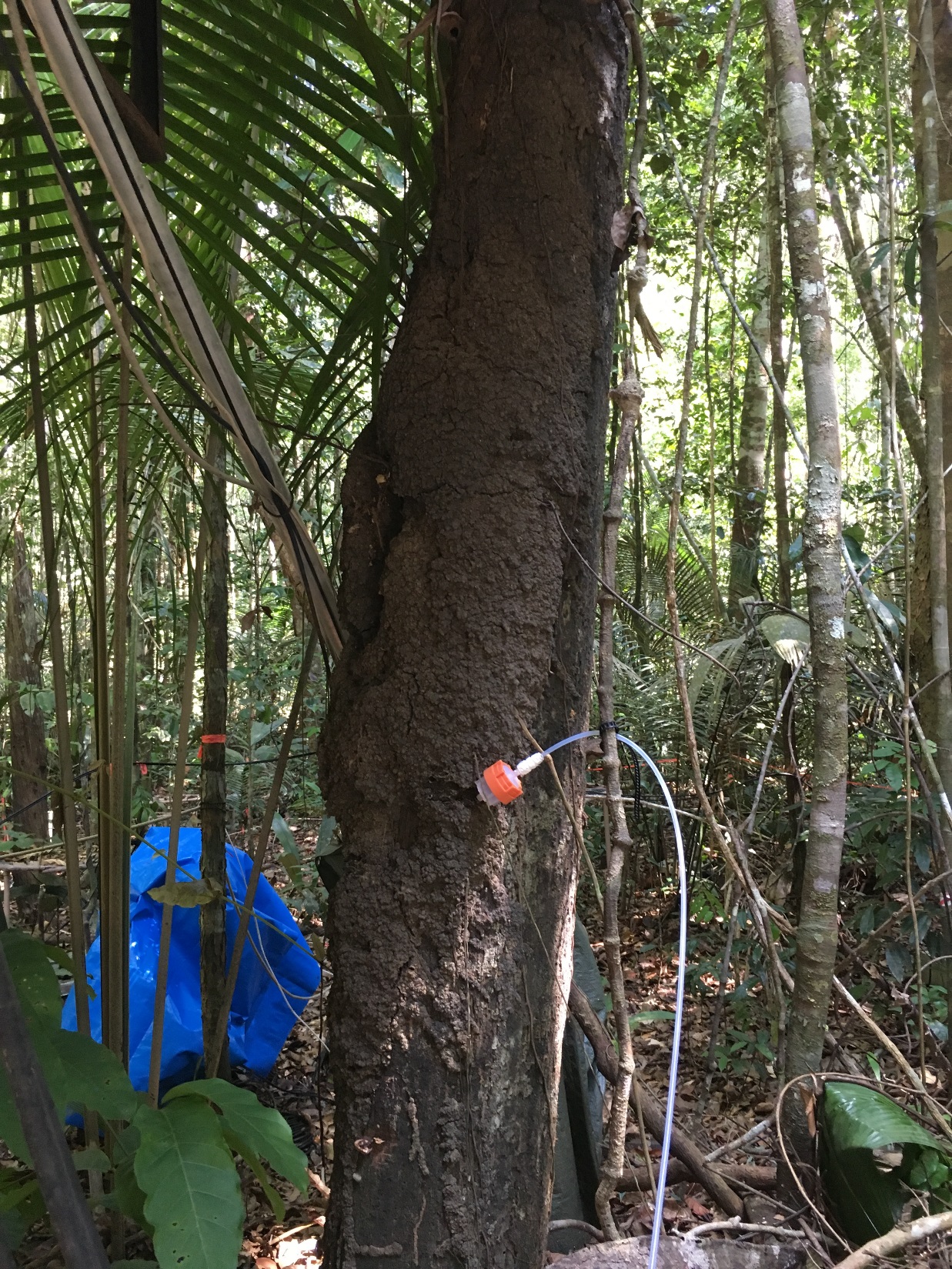
Nora Zannoni and her colleagues measured BVOC emissions at the ATTO tall tower in several heights. Specifically, they looked at one particular BVOC called α-pinene. They found that chiral BOVs at ATTO are neither equally abundant nor is the ratio of the two forms constant over time, season, or height. Surprisingly, they also discovered that termites might be a previously unknown source for BVOCs.
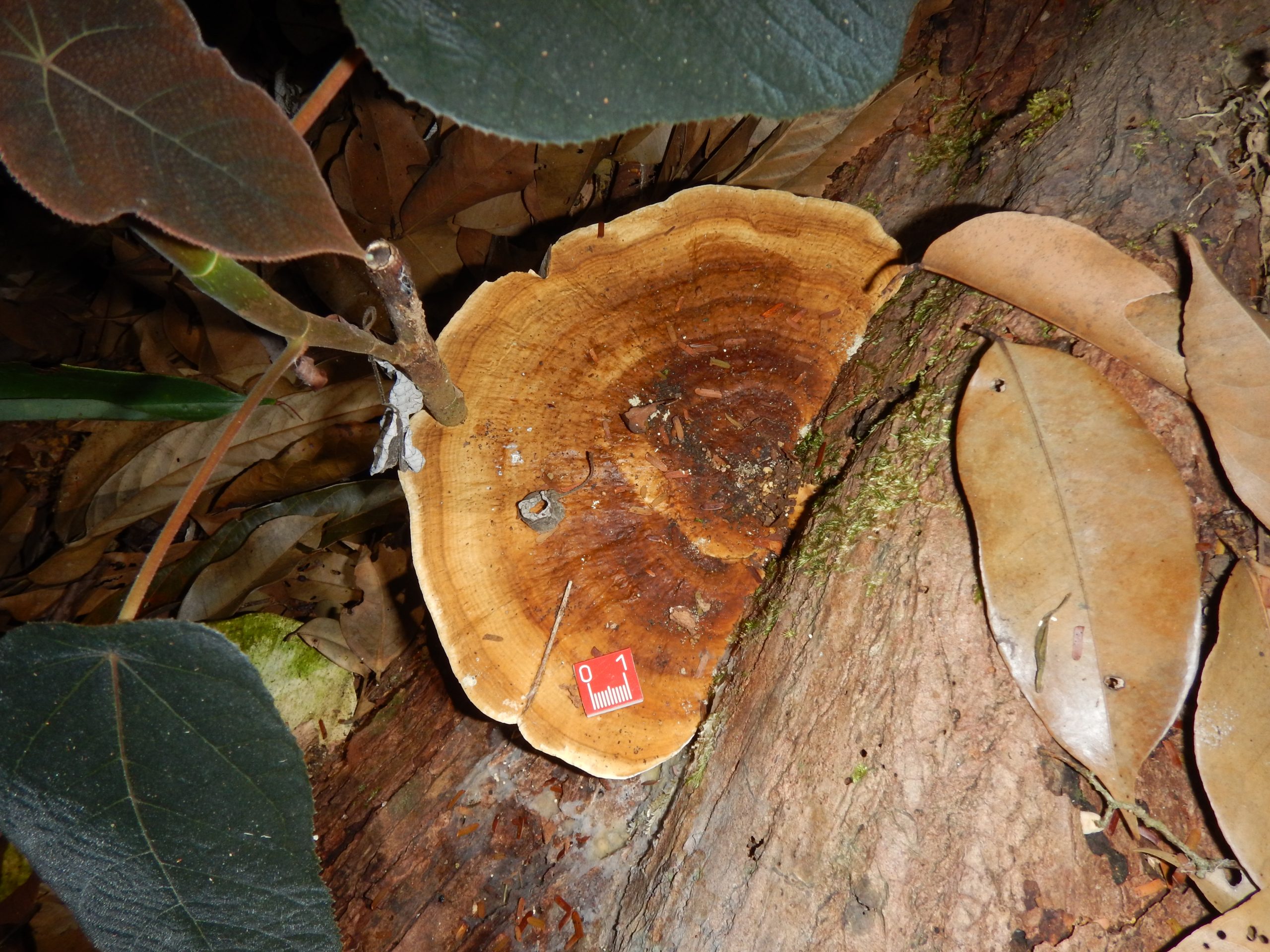
Fungal spore emissions are an important contributor to biogenic aerosols, but we have yet to understand under what conditions fungi release their spores. Nina Löbs and co-authors developed a new technique to measure emissions from single organisms and tested this out at ATTO and with controlled lab experiments. They published their results in the Open Access Journal Atmospheric Measurement Techniques.

Pfannerstill et al. compared VOC emissions at ATTO between a normal year and one characterized by a strong El Nino with severe droughts in the Amazon. The did not find large differences, except in the time of day that the plants release the VOCs. They published their results in the journal Frontiers in Forest and Global Change.