
The rainforest floor is a hidden player in the rainforest’s chemical story, and scientists don’t yet understand the exchange between soil and air. Biogenic volatile organic compounds (BVOCs) in the atmosphere, independent of their source, can react with oxidants, like the OH radical. This generates oxidized products that lead to the nucleation and growth of particles, which can impact clouds and climate. Therefore, these compounds are crucial for rainforest-climate feedbacks.
In a new study, Johanna Schüttler and her colleagues explored how soil in the Amazon rainforest releases or takes up BVOC across different seasons. They focused on key reactive compounds like isoprene, monoterpenes, sesquiterpenes, and two isoprene oxidation products: methacrolein and methyl vinyl ketone.
Their measurements revealed that soil takes up more isoprene and its oxidation products during the dry season, especially in the afternoon. Meanwhile, the soils mainly released sesquiterpene, with the highest emissions observed during the dry season influenced by the 2023/2024 El Niño. Monoterpene fluxes also changed with the seasons, not just in amount but also in which specific compounds were released.
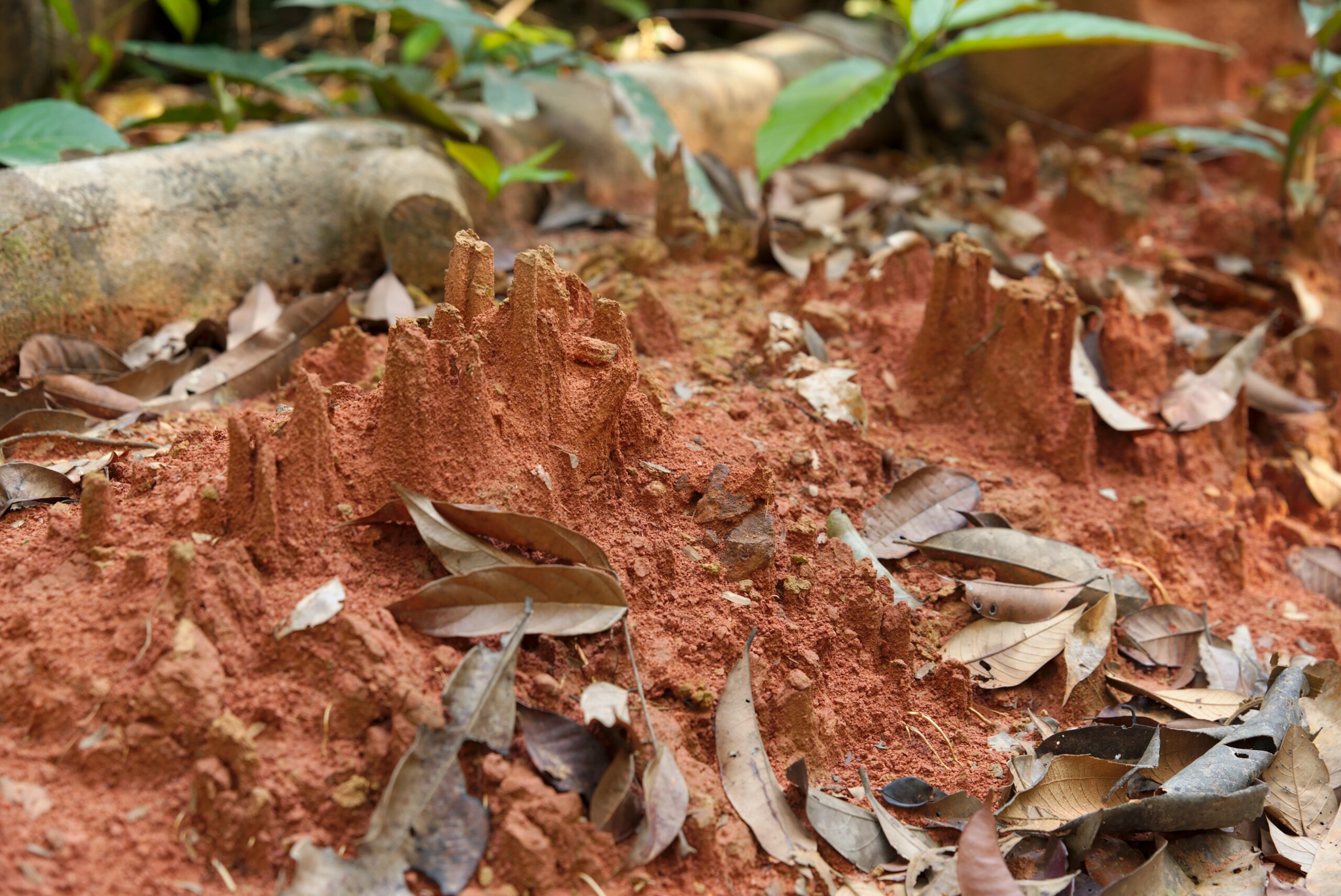
One striking finding was the effect of the leaf litter layer. When leaf litter covered the soil, it did not emit monoterpenes and sesquiterpenes but rather acted as a sink. This is likely due to microbial activity or chemical reactions in the litter. But interestingly, isoprene uptake wasn’t affected by the litter layer, showing that it is likely taken up by organisms below the litter layer.
Finally, the scientists looked at the “mirror image” of chiral monoterpenes that exist in two mirrored forms called enantiomers. They found that the mix of chiral compounds in the soil differed from the air above. These ratios also changed across seasons, suggesting that the soil microbiome could produce or take up these compounds depending on the conditions. For sesquiterpenes, they only detected one enantiomer, hinting at highly specific sources.
Although the contribution of soil to the total BVOC fluxes is small compared to the forest canopy, they still influence the local air chemistry, especially by emitting highly reactive molecules. They also affect soil microbial communities and may even play a role in plant-soil communication. Climate change will likely lead to longer, drier and hotter dry seasons to the Amazon, and extreme events like El Niño are predicted to be more frequent and pronounced. Therefore, understanding these hidden soil processes could help improve our overall picture of ecosystem dynamics.
Schüttler et al. published the study “Chiral volatile organic compound fluxes from soil in the Amazon Rainforest across seasons” Open Access in the journal Biogeosciences.
Similar articles
A new study reveals that leaf turnover strategies and heat stress in Amazonian trees affect atmospheric chemistry and carbon cycling: trees, and in particular brevideciduous trees, emit more and more carbon-rich volatile organic compounds as temperatures rise.

The El Niño drought and heat suppress the capacity of the Amazon rainforest soil to absorb isoprene by a factor of four, while boosting its amount around the forest canopy.
During the 2023–2024 El Niño – the most severe drought ever recorded in the Amazon basin – tree emissions of sesquiterpenes surged. Unexpected emissions of sesquiterpene alcohols in the wet season after the drought, suggesting the forest’s stress-defense metabolism stays active long after the immediate stress has passed.
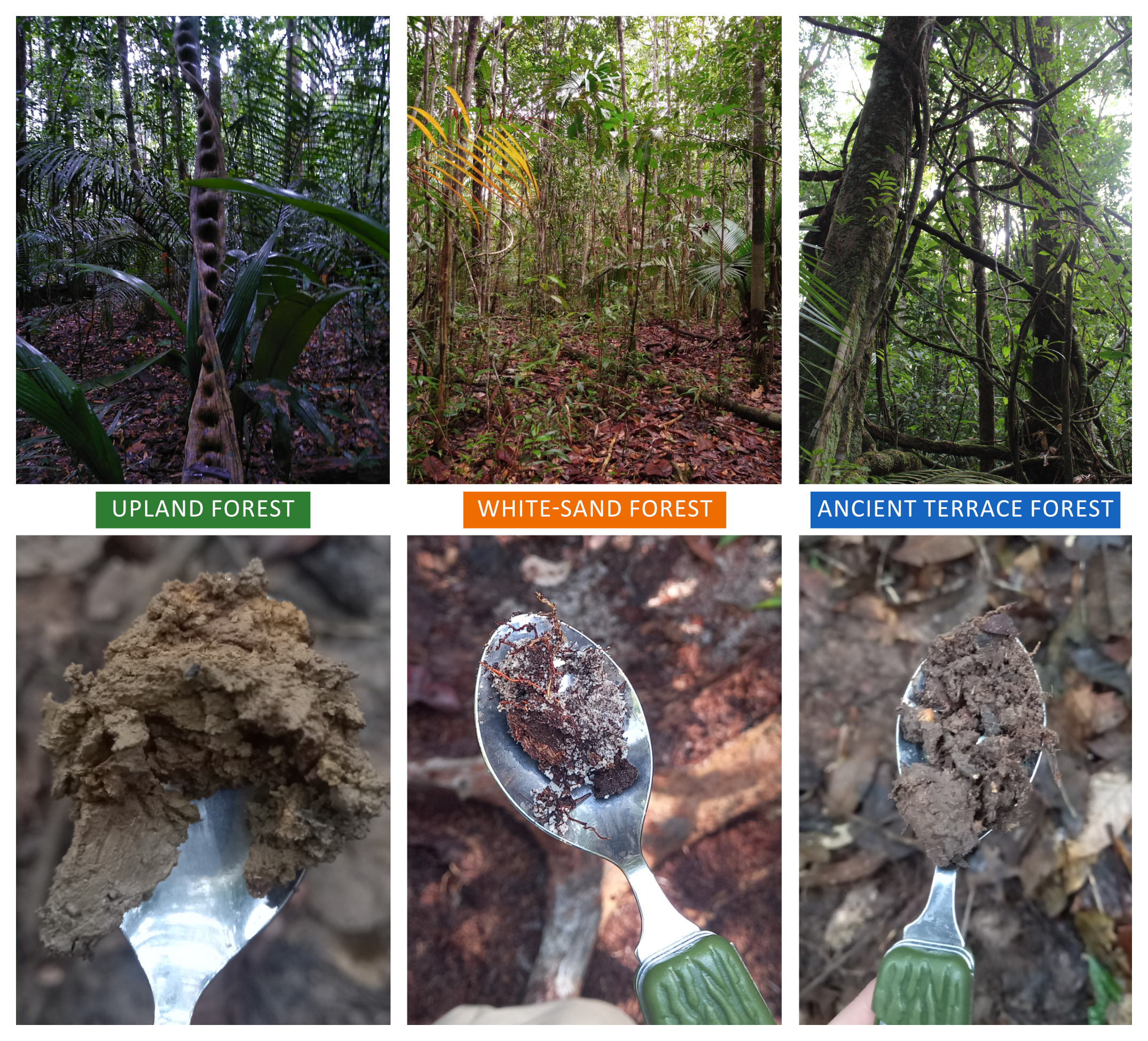
Débora Pinheiro-Oliveira and her colleagues investigated how forest diversity and environmental conditions shape the fluxes of BVOCs and methane in the soil–litter layer. They found that forest diversity and environmental conditions create a mosaic of gas exchange processes across the region.
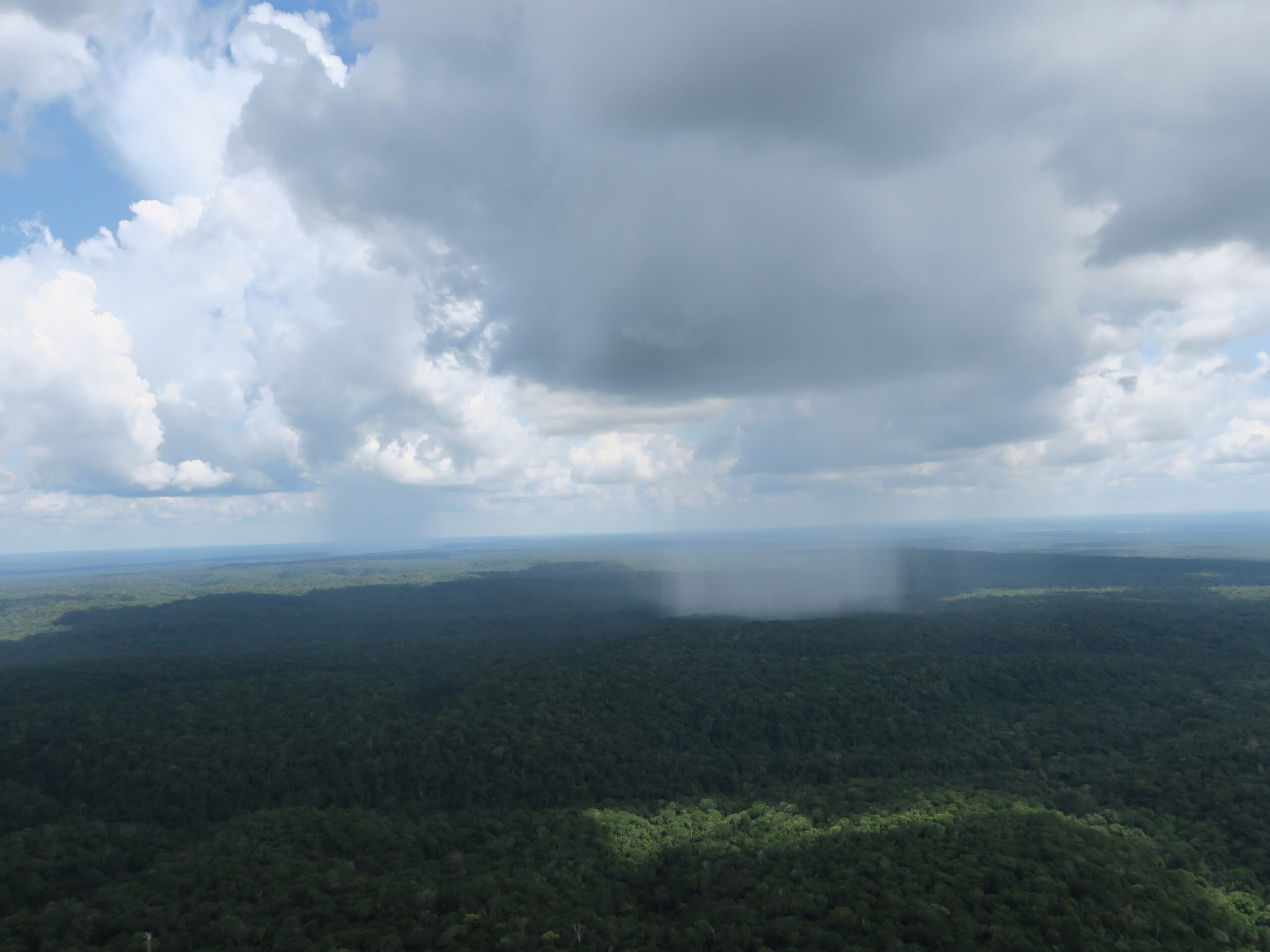
A hidden mechanism continuously forms new aerosol particles from gaseous precursors in the Amazon rainforest, challenging previous assumptions about the sources of cloud condensation nuclei and their role in the hydrological cycle and climate.
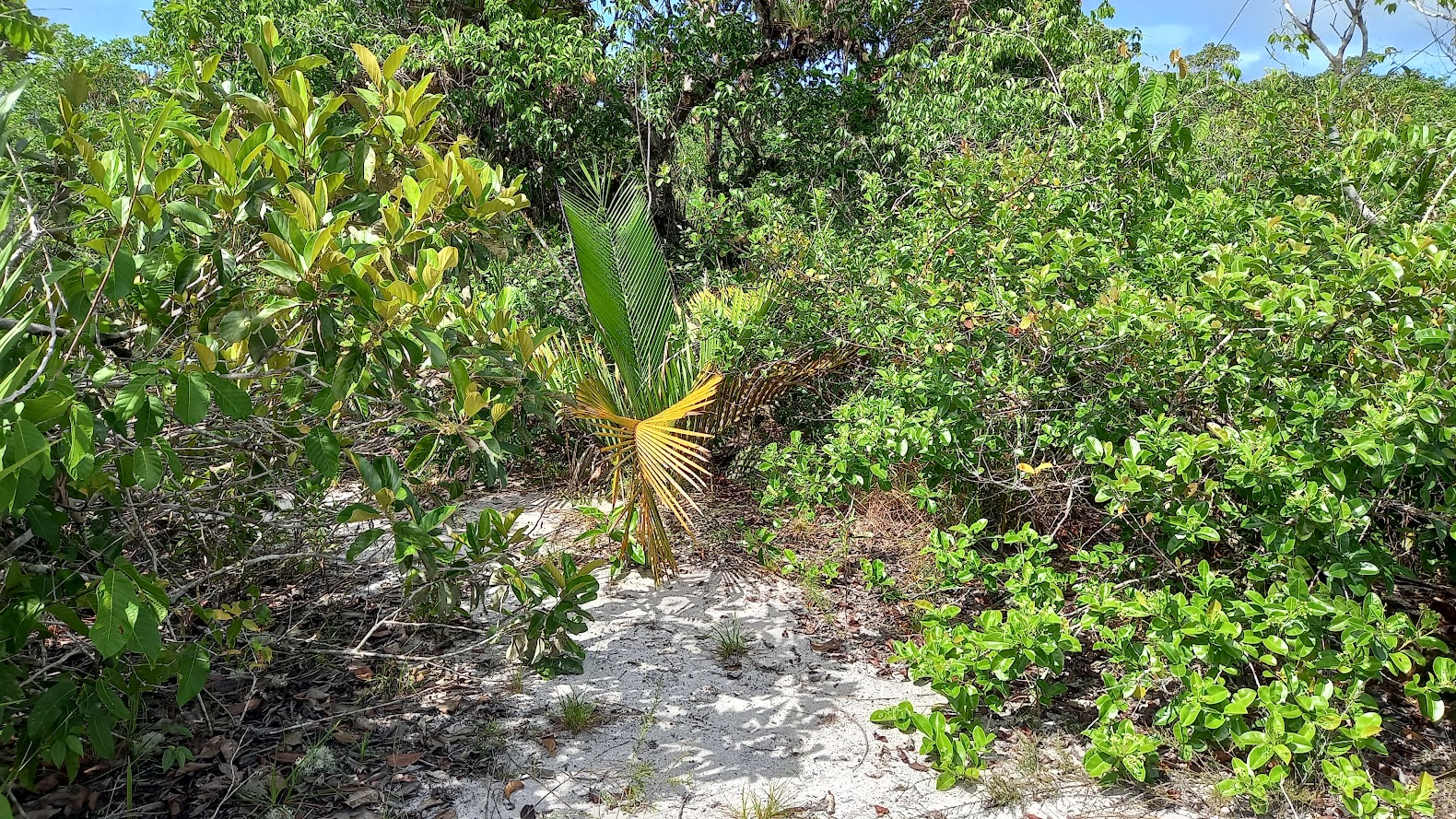
A new study shows that drought stress reorganizes soil carbon sources in Amazon white-sand forest soils, increasing ecosystem stress and affecting carbon and nutrient cycles.
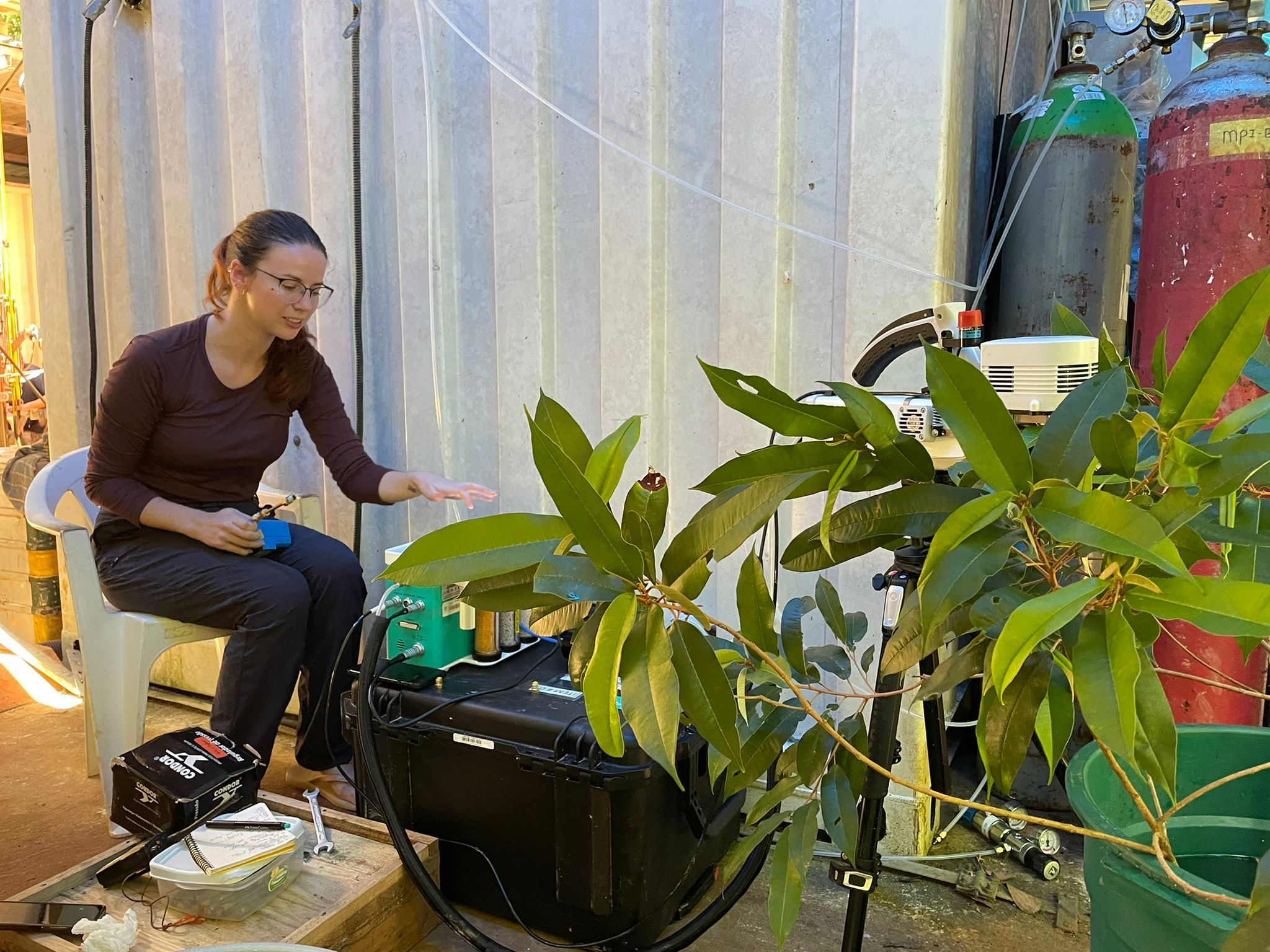
A new study by Robin et al. shows: tree growth strategies influence BVOC emissions in the Amazon, with surprising differences between isoprene and monoterpene producers.
Lange et al. analyzed dissolved organic matter (DOM) in terra firme and white sand soils in the Amazon to learn about the potential limitations of the important nutients phosphorous, nitrogen and sulfur in the different forest and soil types prevalent across the Amazon rainforest.
Scientists measured carbonyl compounds in the atmosphere of the Amazon rainforest with the adopted instrumentation to separate aldehydes and ketones. They made some unexpected discoveries, showing studying the variety of carbonyl compounds separately is extremely worthwhile.

Direct measurements of OH radicals are rare and difficult to achieve. However, since they react with BVOCs, Ringsdorf et al. inferred them from isoprene measurements at ATTO. To do so, they applied a technique called ‘Dynamical Time Warping’ from the field of speech recognition. Akima Ringsdorf et al. published the study “Inferring the diurnal variability of OH radical concentrations over the Amazon from BVOC measurements” Open Access in Nature Scientific Reports.
