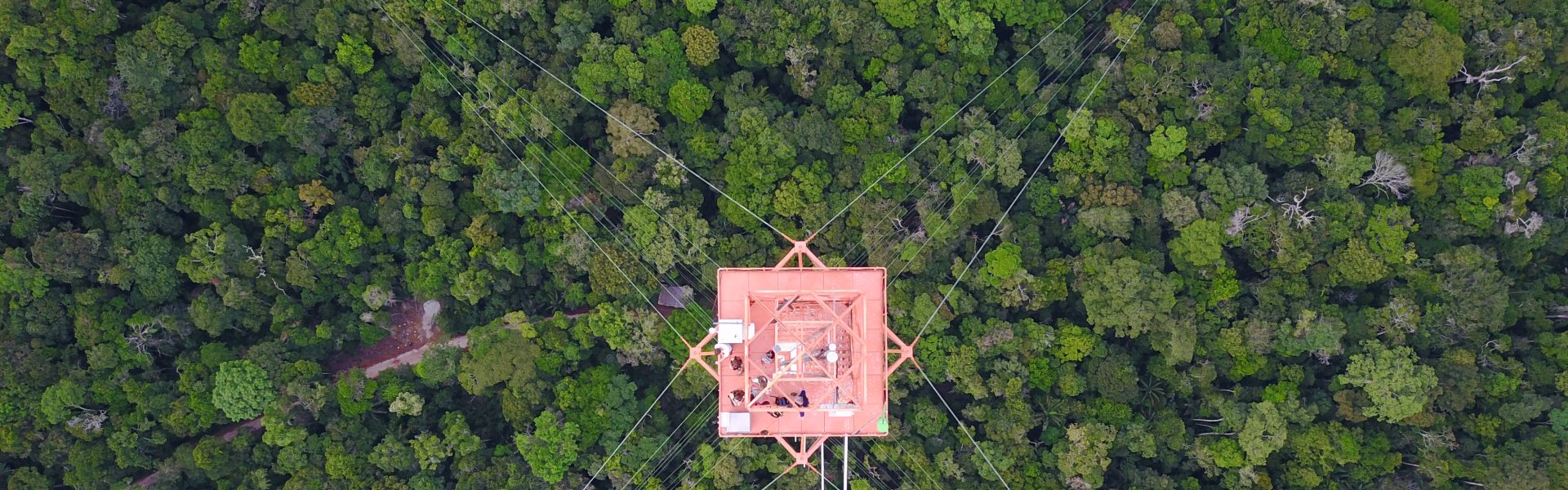

The summer school Amazon Forests and Global Change is part of the Amazon Tall Tower Observatory (ATTO) project, which investigates forest functioning, biodiversity, forest-atmosphere interactions, and atmospheric chemistry and physics. Its objective is to offer scientific theory and methods to investigate forest functioning, biodiversity, and forest-atmosphere interactions in the context of global change, and takes place at INPA, Manaus and at ATTO Sep 19 – 29, 2025.
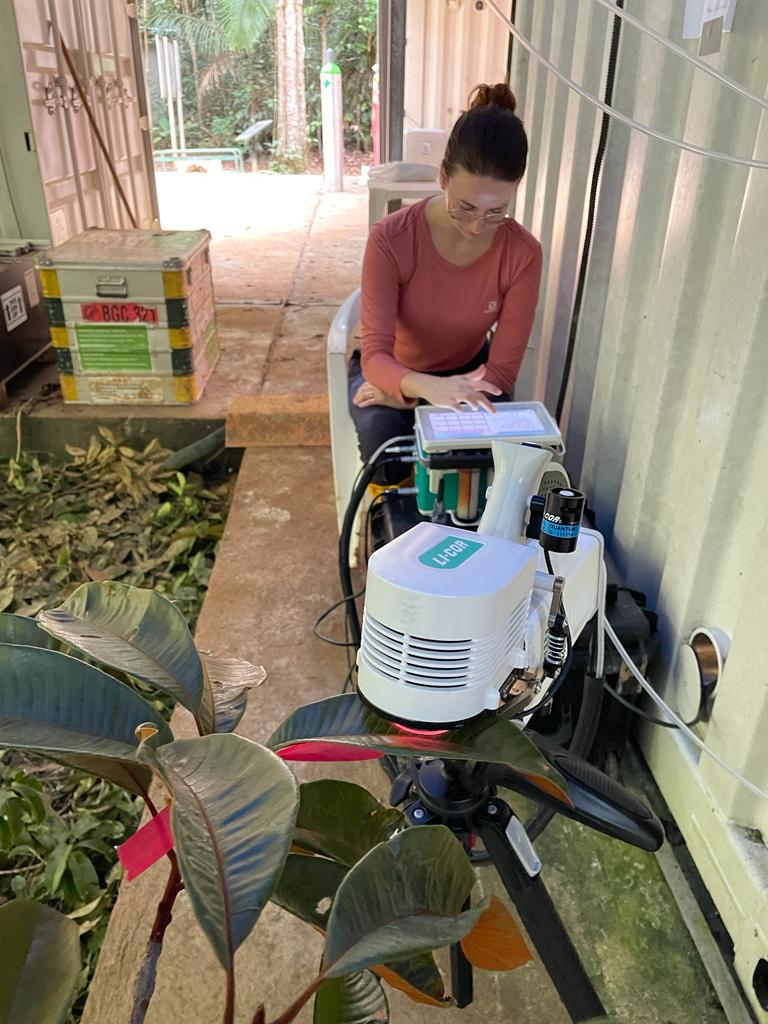
A new study by Robin et al. reveals that isoprene emissions are associated with mechanical or chemical defenses vary between the different leaf phenological types in the central Amazon rainforest.

Lange et al. analyzed dissolved organic matter (DOM) in terra firme and white sand soils in the Amazon to learn about the potential limitations of the important nutients phosphorous, nitrogen and sulfur in the different forest and soil types prevalent across the Amazon rainforest.

Luciane Reis and her colleagues now performed a new study at the ATTO site that shows that gust fronts can also cause large jumps in carbon dioxide concentrations. But what are the sources of this carbon-dioxide-rich air?

Scientists measured carbonyl compounds in the atmosphere of the Amazon rainforest with the adopted instrumentation to separate aldehydes and ketones. They made some unexpected discoveries, showing studying the variety of carbonyl compounds separately is extremely worthwhile.

Atmospheric aerosol particles are essential for the formation of clouds and precipitation, thereby influencing the Earth’s energy budget, water cycle, and climate. However, the origin of aerosol particles in pristine air over the Amazon rainforest during the wet season is poorly understood. A new study reveals that rainfall regularly induces bursts of newly formed nanoparticles in the air above the forest canopy.
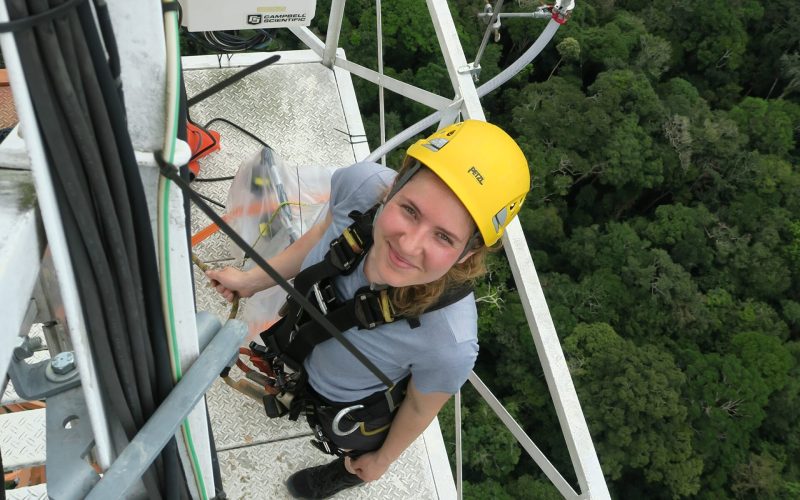
My name is Stefanie Hildmann and I am currently a PhD student in the group ‘Organic Trace Analysis’ of Prof. Thorsten Hoffmann at the Johannes Gutenberg – University of Mainz (Germany). In my PhD, I want to characterize secondary organic aerosols (SOA) chemically at the molecular level.
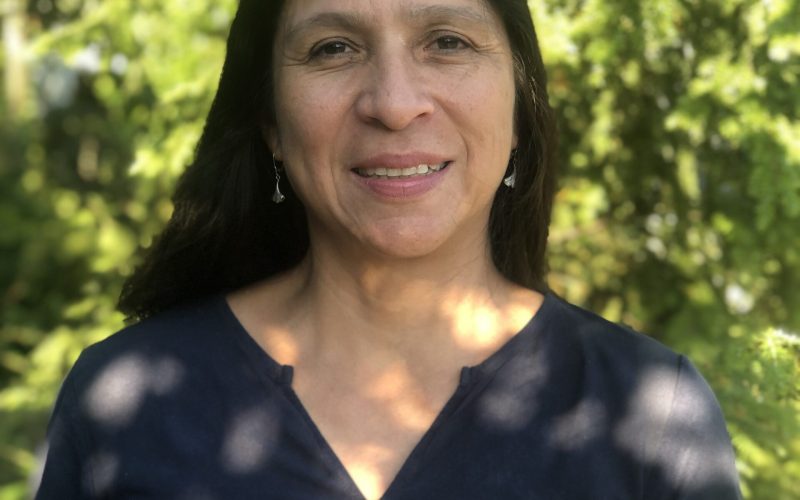
Hi, my name is Viviana Horna. This April 2022 I started working at the Max Planck Institute for Biogeochemistry as the new scientific coordinator of the ATTO project. I studied tropical forestry in Peru for my BSc, where I am from.
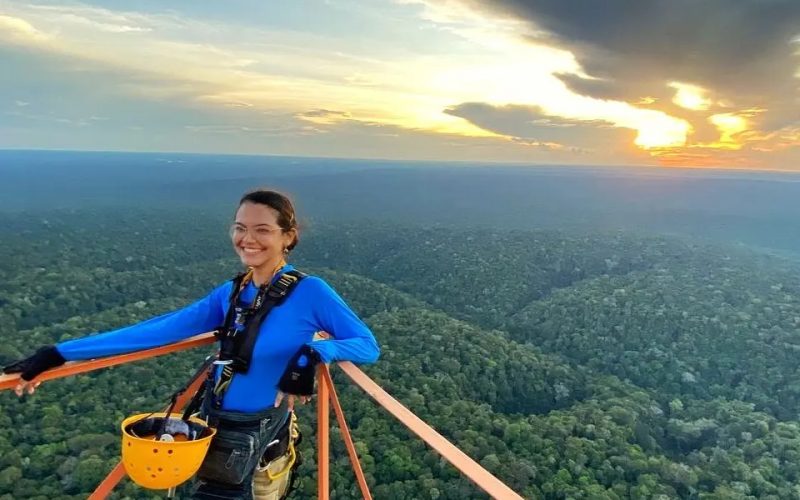
Hi everyone, my name is Anna Moraes! I started recently as a Ph.D. student at the National Institute of Amazonian Research (INPA), in Manaus, in the group of Dr. Eliane Gomes Alves. My project focuses on herbivore-induced plant volatiles (HIPVs).
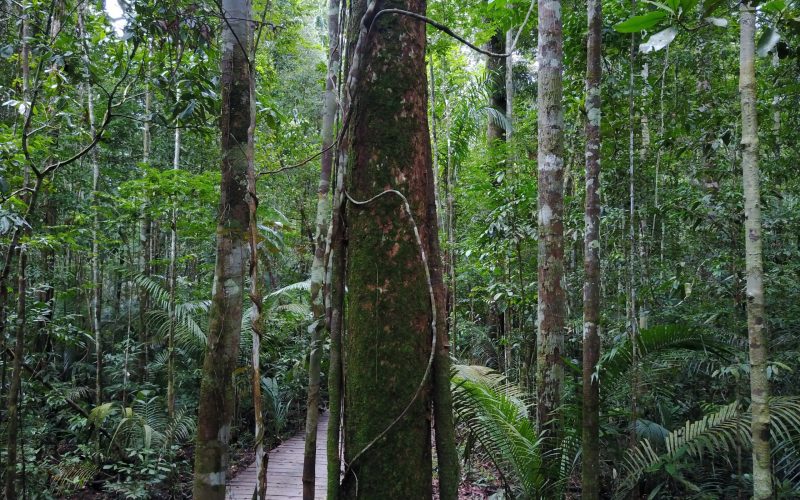
Achim Edtbauer wrote a blog for the Nature Community Ecology and Evolution. He shares insights about how his latest paper came to be, and what it is like to study mosses and lichens at ATTO as an atmospheric physicist.
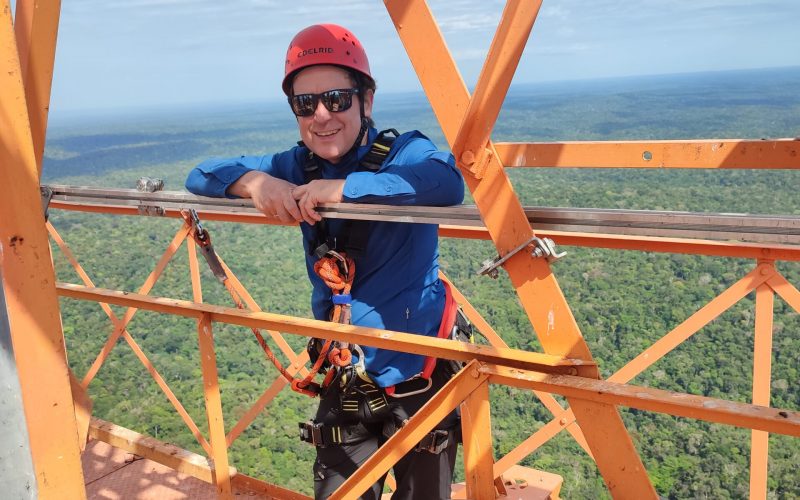
The Amazon rainforest has an enormous turnover of greenhouse gases. The only way to find out how this turnover will develop over time is to measure it regularly. Therefore, my colleagues and I, recently installed a flask sampler set-up to automatically collect air samples to establish a time series of greenhouse gas measurements at ATTO. My name is Markus Eritt, I am a laboratory head at the ICOS Central Analytical Laboratory in Jena, which is located at the MPI-BGC.
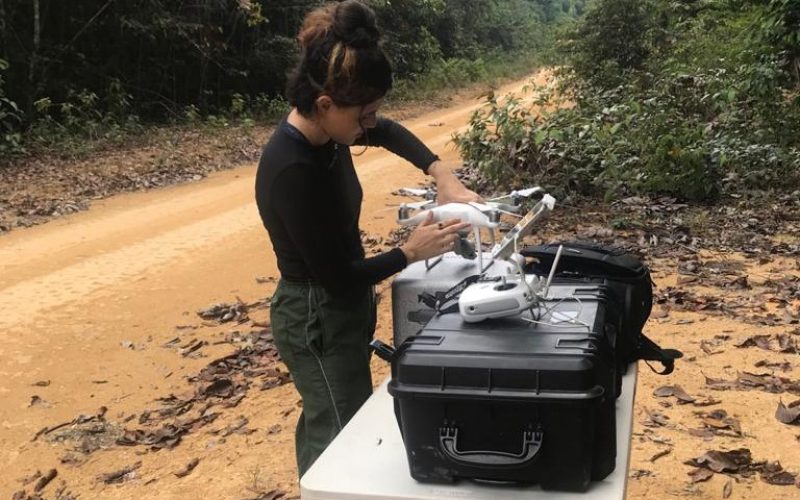
Hello, I am Adriana Simonetti. I just finished my Master in Tropical Forest Sciences at the National Institute for Amazon Research (INPA). I quantified canopy gaps in the Amazon from aerial photographs collected during repeated drone flights. I deeveloped this techinque in the scope of the ATTO project, under the supervision of Dr Daniel Marra.