
Water and light drive photosynthetic activity of Amazonian mosses

A new study by Löbs et al. in Biogeosciences documents the microclimatic conditions for tropical mosses as a baseline for studies on their overall relevance on biogeochemical cycling. They found that water and light are overall the most important requirements for them to become photosynthetically active. However, their habitat determines which of the two plays the bigger role.

Publication: Are termites an unknown source for BVOCs?

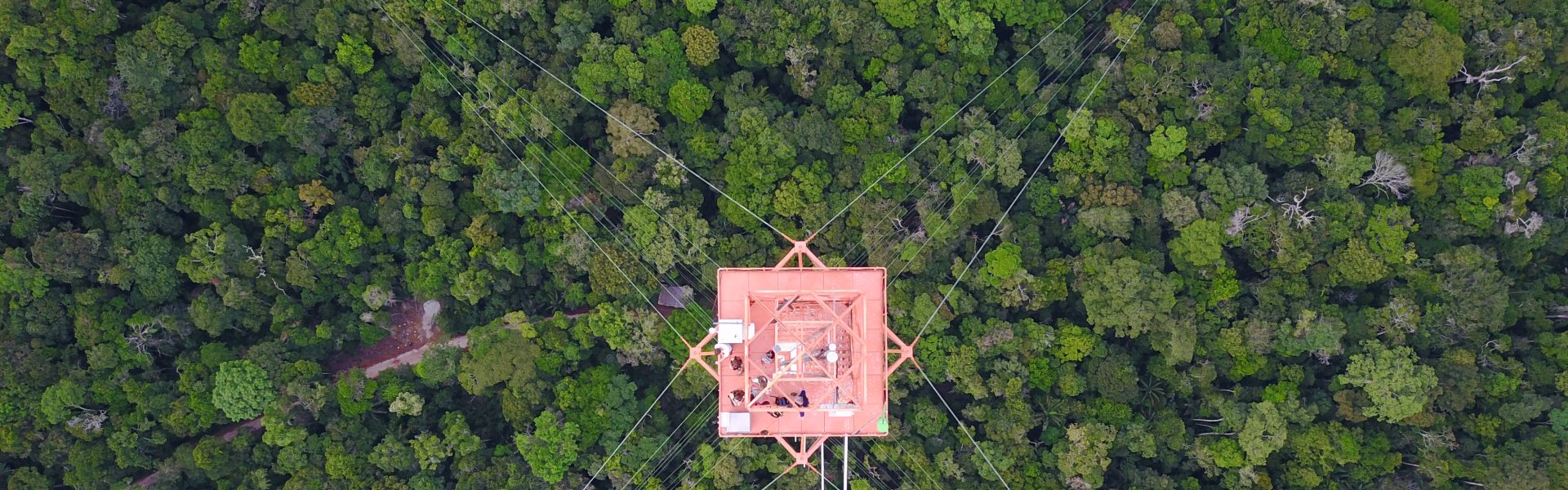
Nora Zannoni and her colleagues measured BVOC emissions at the ATTO tall tower in several heights. Specifically, they looked at one particular BVOC called α-pinene. They found that chiral BOVs at ATTO are neither equally abundant nor is the ratio of the two forms constant over time, season, or height. Surprisingly, they also discovered that termites might be a previously unknown source for BVOCs.