Stress protection of Amazon trees, induced by climate warming, may alter atmosphere chemistry

This text is a press releases first published by the Max Planck Institute for Biogeochemistry.

A recent study shows that trees of the central Amazon Rainforest react to climate stress by emitting more volatile compounds, which interfere with the atmosphere’s chemistry. The study, performed by researchers from the Max Planck Institute for Biogeochemistry in Jena, Germany and the National Institute of Amazonian Research (INPA), Brazil, was published in Nature Communications Earth & Environment.

To the point:

  • Higher temperatures increase the leaf-level emissions of highly reactive, carbon-rich volatile organic compounds (VOCs) such as monoterpenes and sesquiterpenes.
  • Higher VOC release occurs especially in brevideciduous trees, which periodically shed their leaves, as opposed to evergreen trees.
  • Higher VOC release leads to increased loss of carbon from the biosphere to the atmosphere.
  • Future warming and heatwaves could alter atmospheric chemistry and carbon cycling across the Amazon, the world’s largest tropical forest.

The Amazon Rainforest is one of the largest carbon reservoirs on Earth. It is also the world’s largest source of biogenic volatile organic compounds (VOCs). These carbon-based gases are naturally released by vegetation. They protect trees against various sources of stress, e.g. by mitigating oxidative stress and deterring herbivores. Once in the atmosphere, VOCs react rapidly with other gases. This influences the formation of airborne particles and clouds, which contributes to shaping the regional climate and rainfall patterns.

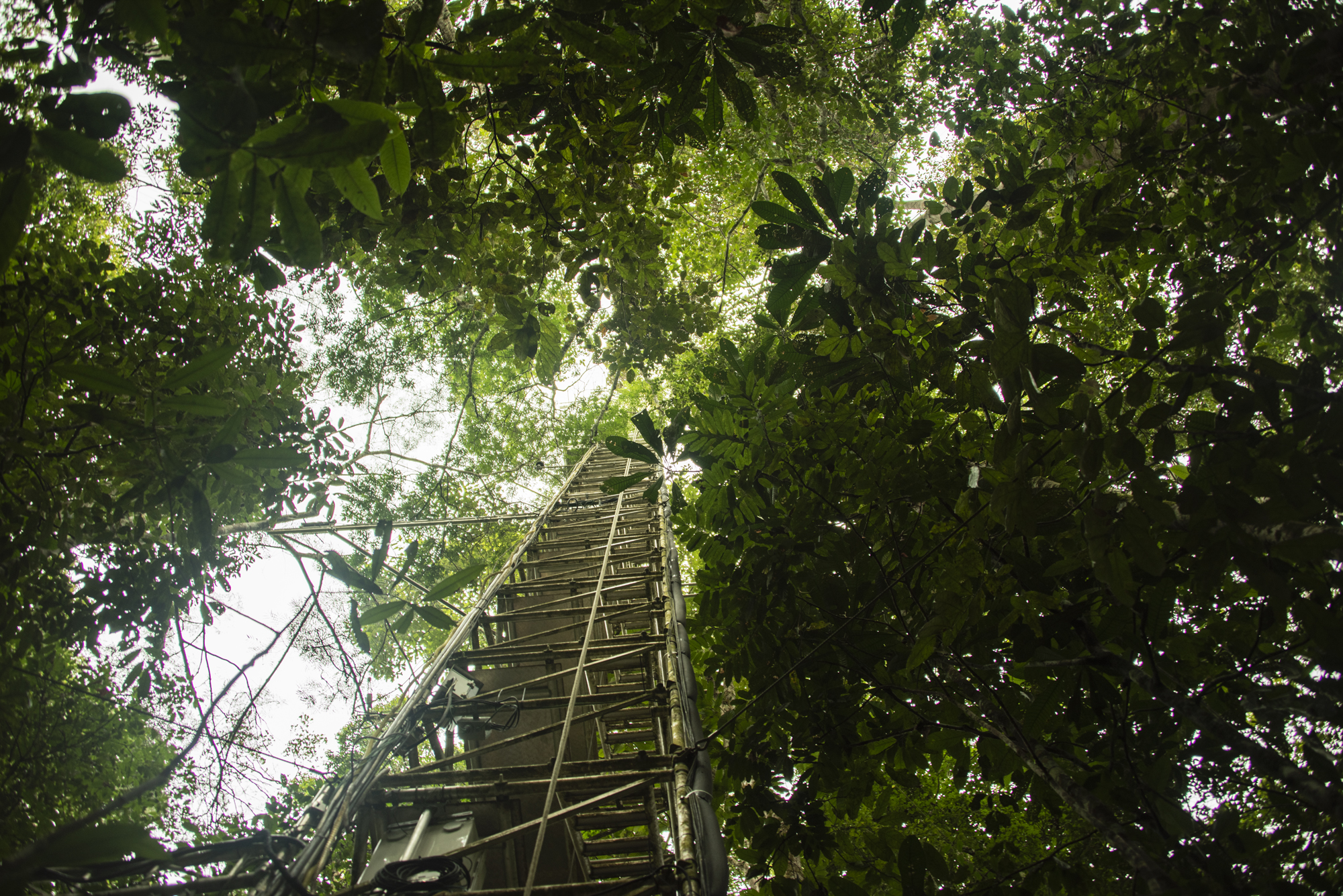
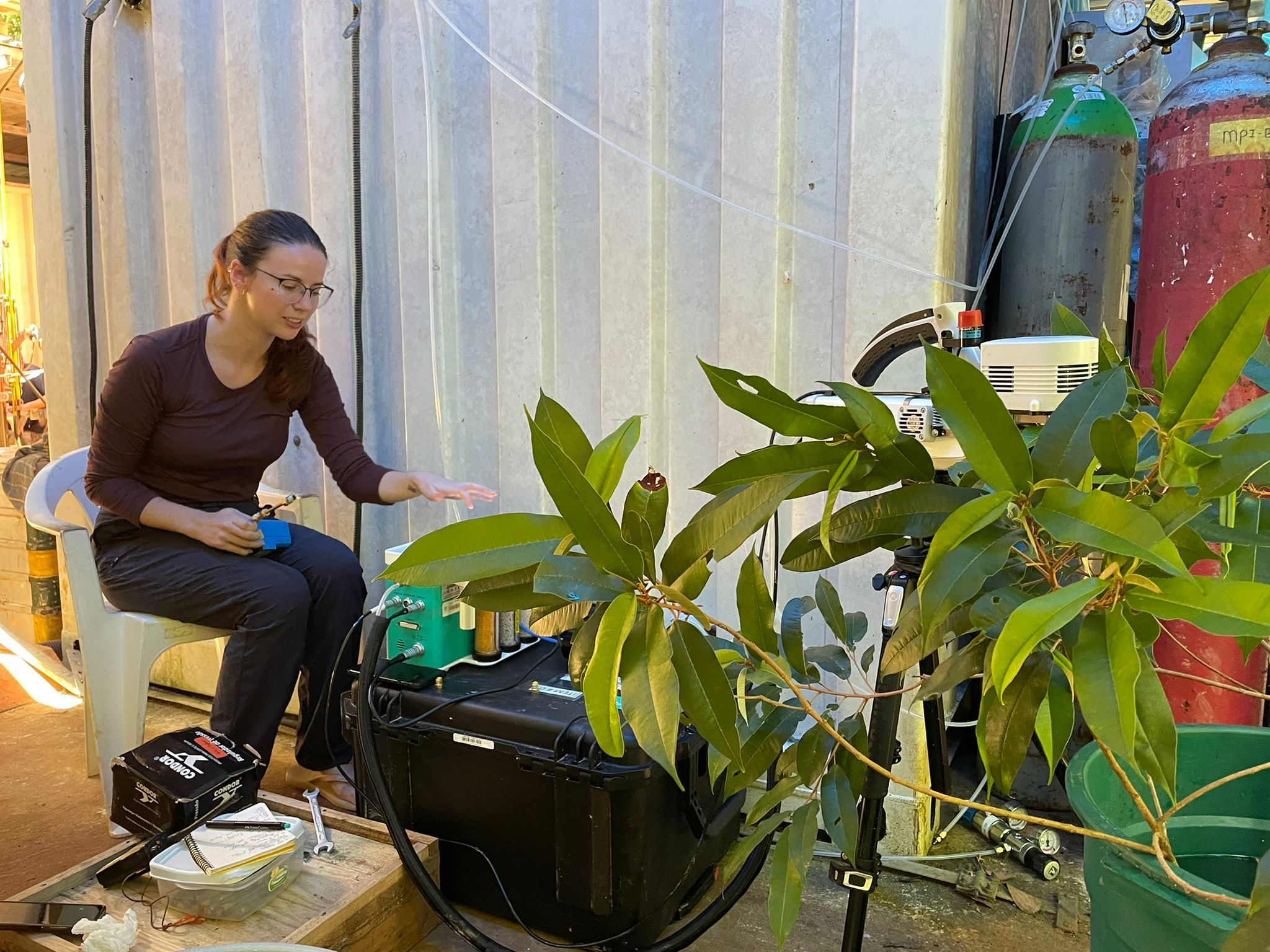
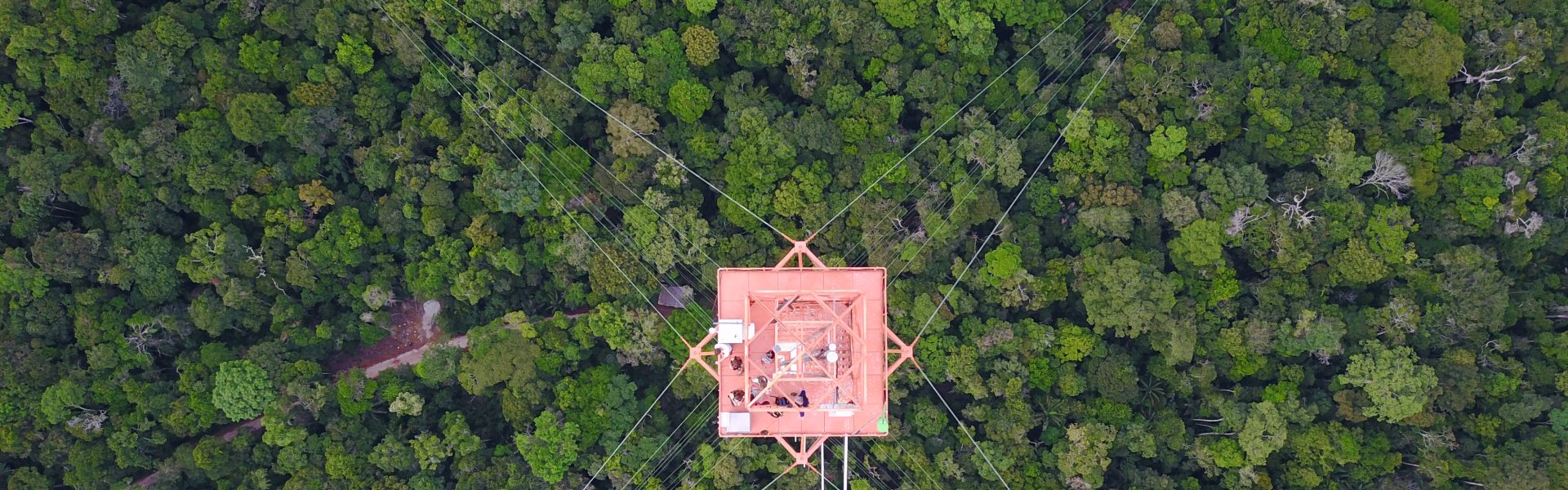
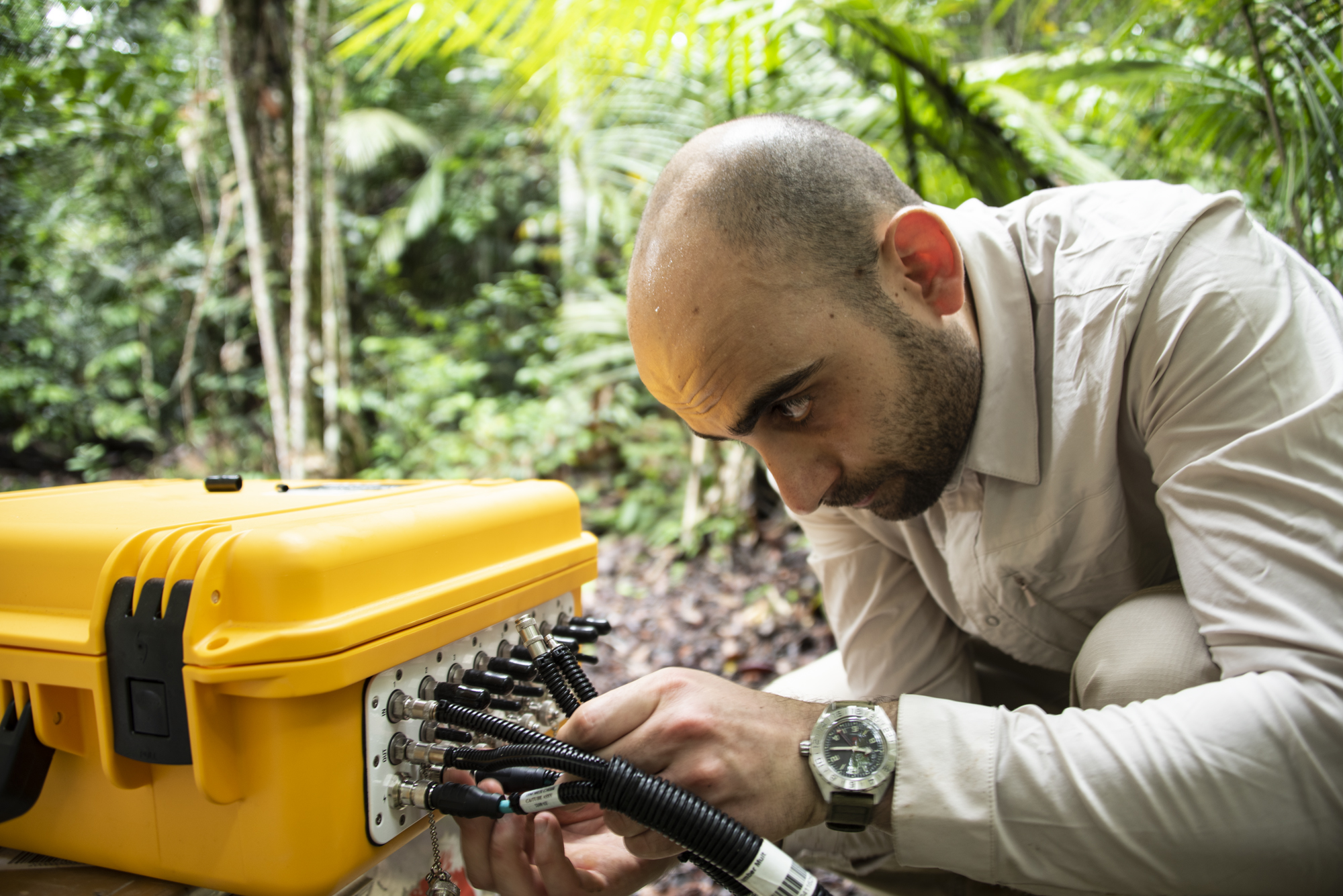
Researchers from the Max Planck Institute for Biogeochemistry and the National Institute of Amazonian Research (INPA) analyzed how a warming world might change emissions of VOCs. At the Amazon Tall Tower Observatory (ATTO) site in the remote Amazon rainforest, the scientists measured the trees’ emissions of different VOCs, as well as their key physiological traits linked to photosynthesis and heat tolerance. They focused on two major ecological groups that differ in their leaf-turnover strategy to compare their heat-induced VOC emission response. Evergreen trees are the most prevalent in the Amazon and retain their leaves year-round. In contrast, brevideciduous trees massively replace their canopies and remain leafless for up to one month during each year’s dry season.

The researchers found that higher leaf temperatures triggered substantially higher emissions of VOCs. Additionally, they revealed a shift from the emission of isoprene (five carbon atoms) to the highly reactive, carbon-rich monoterpenes (ten carbon atoms) and sesquiterpenes (15 carbon atoms). This shift was particularly evident in brevideciduous trees. Monoterpenes and sesquiterpenes are among the most chemically reactive gases released by vegetation and can strongly affect atmospheric processes. The shift towards higher emissions, and the emissions of compounds with more carbon atoms also means that forests lose more carbon to the atmosphere as temperatures rise.

“We also noticed, that different tree groups use different physiological strategies in the face of heat stress”, says Michelle Robin, lead author and postdoctoral researcher at the Max Planck Institute for Biogeochemistry. Isoprene emitting brevideciduous tree species have higher baseline photosynthetic rates. This suggests that they rely on the mitigating effects of the biogenic volatiles as a strategy to respond to heat stress. However, evergreen tree species that did not emit isoprene exhibited greater baseline stomatal conductance, allowing cooling by transpiration of water vapor, and stronger thermal stability across several photochemical traits. This indicates that these trees use a different strategy to cope with heat, which is centered on sustained physiological stability.

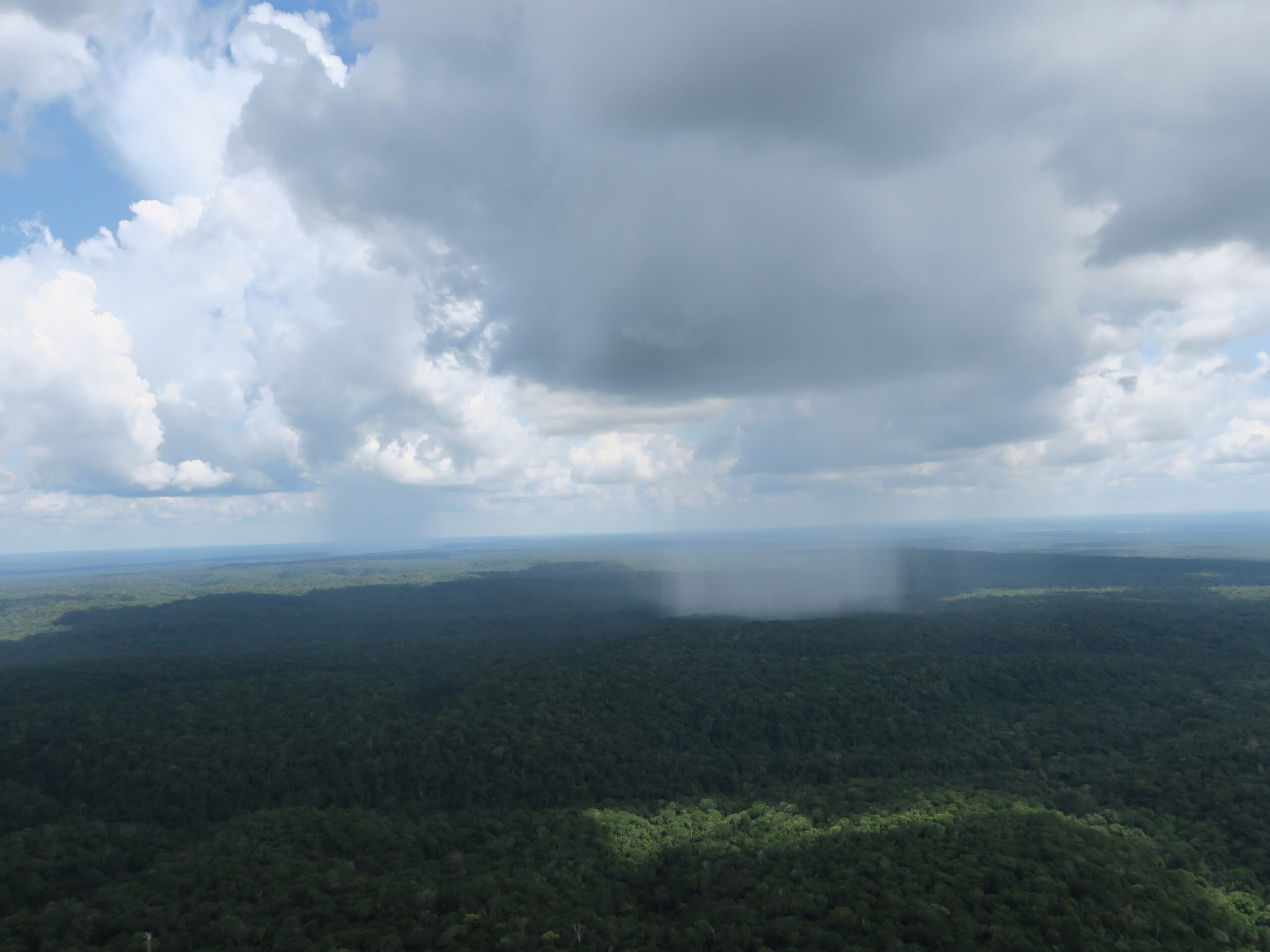
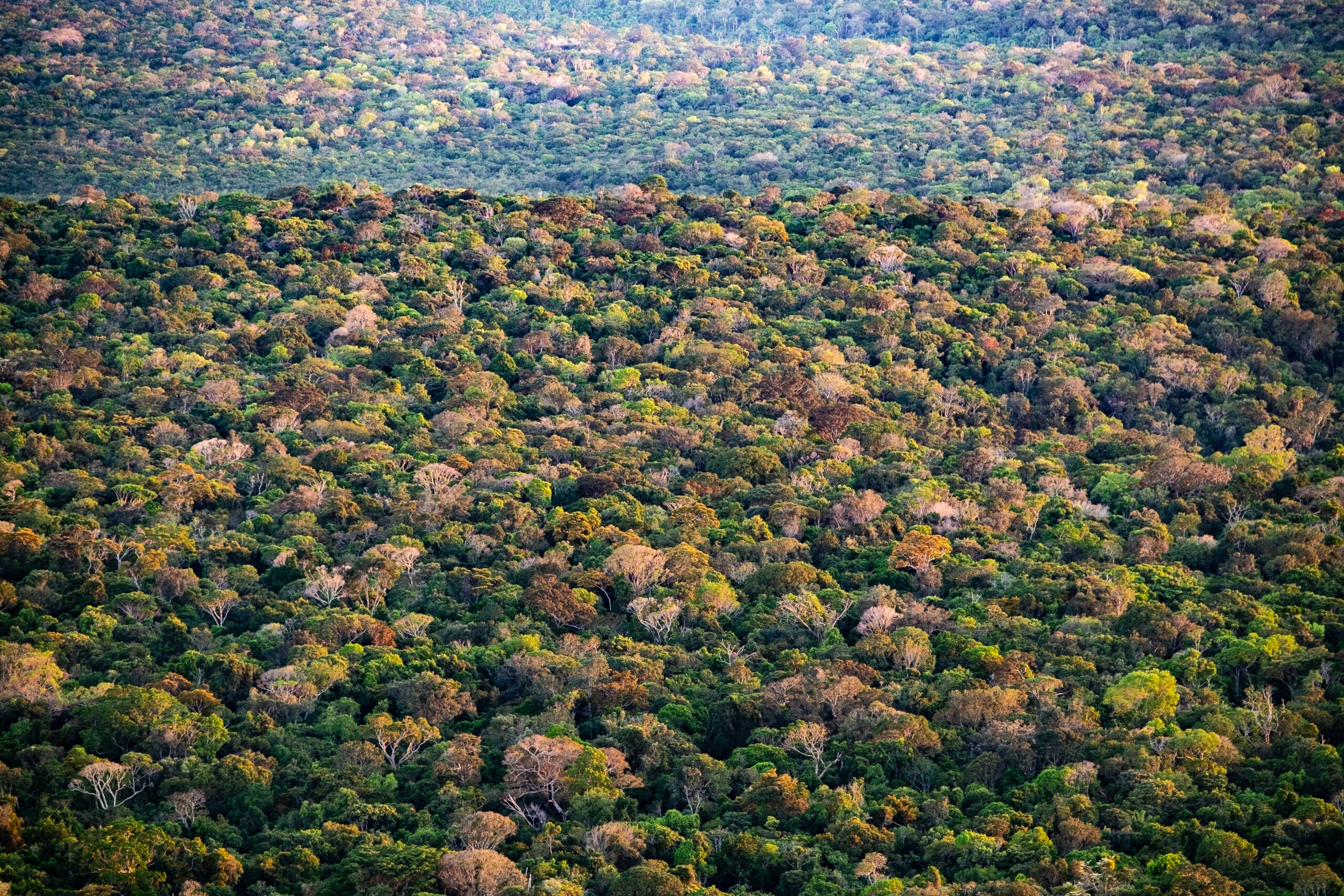
During the dry season, the canopy appears in many different colors. Trees shed and regrow their leaves at different times, so they exhibit different phenological stages: young leaves (light green), mature leaves (dark green), old leaves (yellow, orange, red), and bare.
© Paulo Brando / IPAM / WHRC
Prior studies have shown that dry-season leaf turnover may serve as a protection mechanism against drought and herbivory stress. Importantly, trees can transition from evergreen to brevideciduous in response to stress and disturbances. As a consequence, with continued climate warming and frequent heat waves the Amazon rainforest could see a shift towards brevideciduous leaf turnover strategies, which could further amplify emissions of biogenic volatile organic compounds.

Finally, the team tested whether accounting for leaf turnover strategies could improve the accuracy of isoprene emissions estimates in a global vegetation emission model. The commonly used default approaches substantially overestimated isoprene fluxes.  “Our results show that models incorporating phenologically-informed parameters derived from field measurements at the ATTO site produced more realistic emission estimates”, concluded Eliane Gomes Alves, project group leader at the Max Planck Institute for Biogeochemistry.

Climate projections indicate that the Amazon region will experience rising temperatures and more frequent heat extremes in the coming decades. The new findings suggest that this could alter how trees allocate carbon, i.e. the amount and type of compounds they release into the atmosphere. Since these emissions influence atmospheric reactivity, aerosol formation, cloud development, and carbon cycling, even minor changes in emission patterns could impact climate processes on regional and potentially global scales.

Robin et al. published the study “Coordinated volatile isoprenoid production and leaf turnover strategy protect central Amazon Forest trees against stress” in the journal Nature Communications Earth and Environment.

Similar articles