AGU Fall Meeting 2020 meeting will be held virtually during the original 7-11 December dates. We want to draw your attention to one session in particular: Tropical forests under a changing environment. Abstract submission deadline is 29 July.
Two Amazonian local activists Natalina do Carmo and Milena Raquel Tupinambá, visited ATTO last year. Brazilian filmmaker Barbara Marcel went with them to capture the exchange between the scientists, who study the forest, and the communities who call the forest their home. You can now see what she discovered in a video installation called “Ciné-Cipó - Cine Liana” in the virtual exhibition "Critical Zones - Observatories for Earthly Politics" by the ZKM (Zentrum für Kunst und Medien) Karlsruhe.
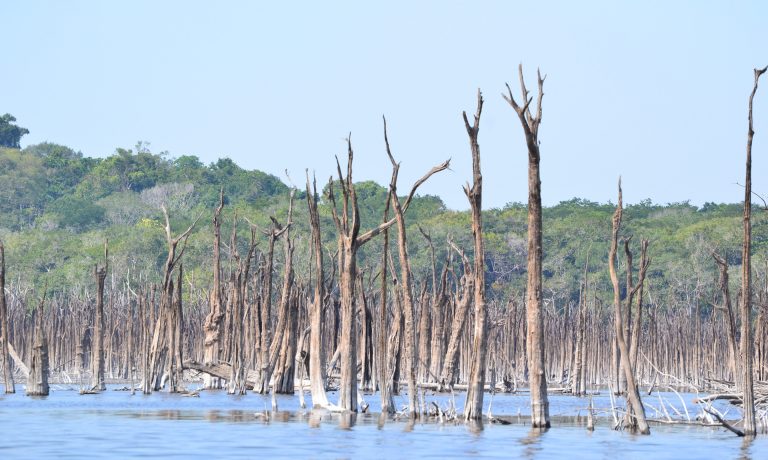
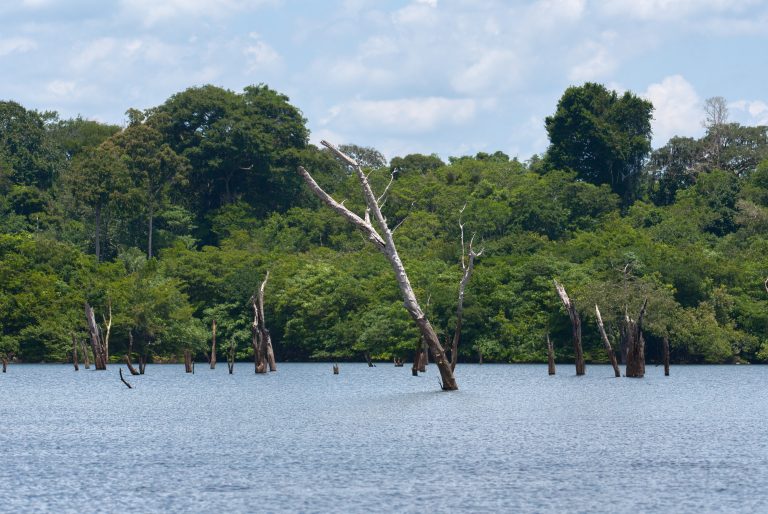
Recently we mentioned that drowned trees along the Uatumã River a likely the cause for enhanced methane emissions measured at ATTO. Now Angélica Resende and her co-authors investigated how changes in flooding regimes impact tree mortality in floodplains. They compared two sites in the Amazon basin. Along the Jaú River, the floodplain environment is still largely undisturbed. Along the Uatumã near ATTO, on the other hand, the flooding regime has been altered by the implementation of the Balbina hydroelectric plant further upstream.
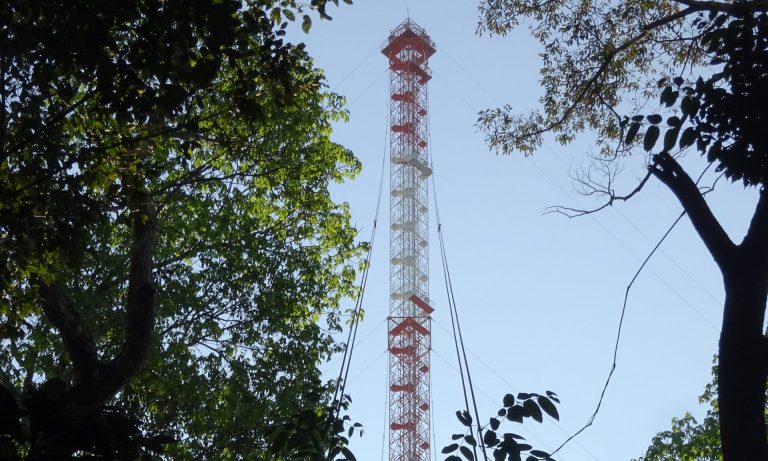
Santiago Botía and his co-authors analyzed methane in the atmosphere at ATTO. Over the course of five years, they measured methane along with other properties, such as wind speed, wind direction and the stratification of the atmosphere. They noticed frequent pulses of methane emissions during the night, but only under certain conditions. Surprisingly, these nighttime events mostly occurred in the months of July to September – the dry season in the Amazon. Botía et al published the study Open Access in Atmospheric Chemistry and Physics, Issue 20: Understanding nighttime methane signals at the Amazon Tall Tower Observatory (ATTO).
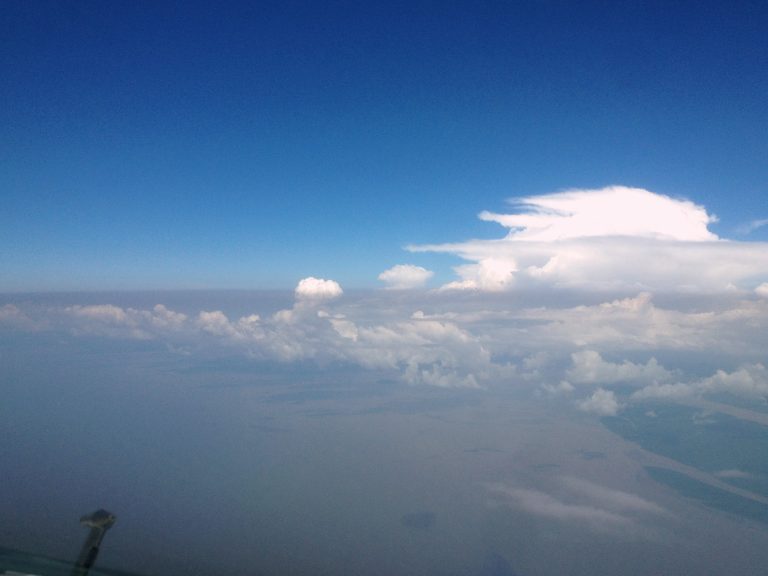
When forests burn those fires produce a lot of smoke. And that smoke usually contains soot, also called “black carbon”. Black carbon particles are aerosols that absorb radiation and as such can warm the Earth’s atmosphere and climate. But we still have much to learn about aerosols, their properties, and distribution in the atmosphere. One of those things is the question of how black carbon emitted from biomass burning in Africa (i.e. forests, grasslands, savannas etc.) is transported across the Atlantic and into the Amazon basin, and what role it plays there. Bruna Holanda and her co-authors tackled this in their new study published in ACP.
The news reaching us from Brazil, and in particular from Manaus, these days are very grim. On behalf of the ATTO partners from Germany and elsewhere, I would like to express our concern and support for our colleagues in Brazil.