
Mirror image molecules reveal drought stress in the Amazon rainforest
New study by the Max Planck Institute for Chemistry shows: The ratio of certain forest scent molecules provides precise insights into the stress state of the rainforest.
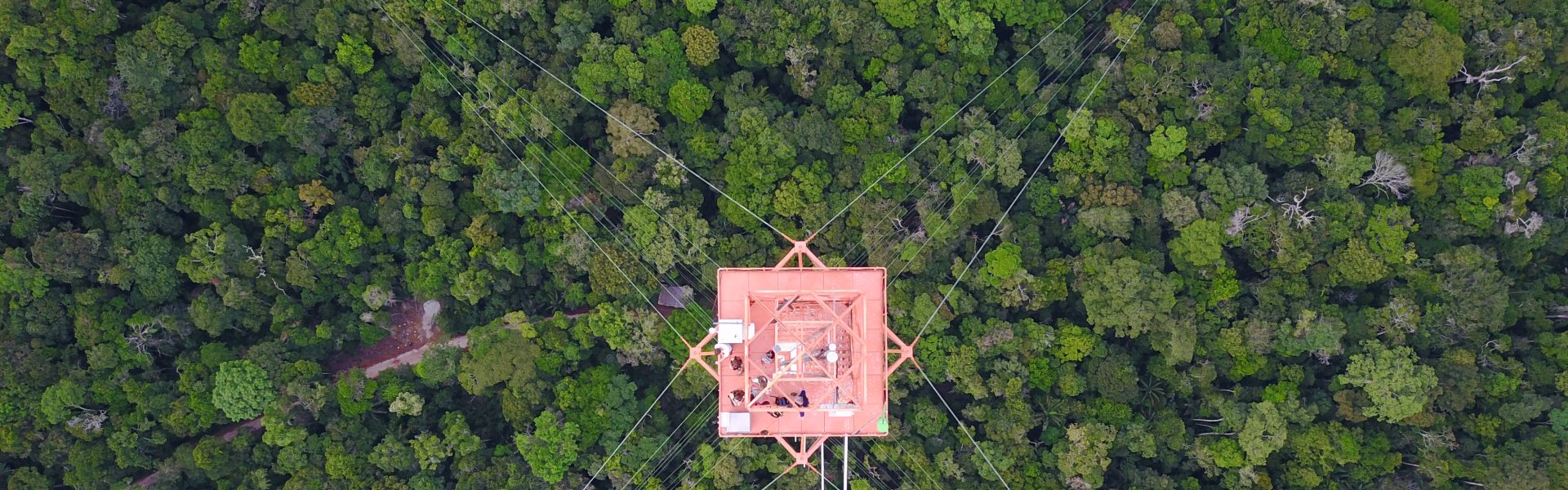
New study by the Max Planck Institute for Chemistry shows: The ratio of certain forest scent molecules provides precise insights into the stress state of the rainforest.
BVOC emissions in the Amazon have been studied for decades, but we still don’t fully understand when and under what conditions tree species or even individual trees emit more or fewer isoprenoids. To address this, Eliane Gomes Alves and her colleagues measured isoprenoid emission capacities of three Amazonian hyperdominant tree species.
A new study shows that tree growth of Nectandra amazonum (Lauraceae) in the Central Amazonian floodplains does not respond to the annual long-term flooding but to variation of minimum temperature and evapotranspiration.
In a new study, Nathan Gonçalves and co-authors now wanted to find out if extreme climate events such as droughts influence leaf flushing, and thereby the average leaf age and photosynthetic capacity of the forest, and if is it possible to monitor more subtle changes associated with extreme events (compared to season changes) with satellites?