This text is a press release provided and first published by the Max Planck Institute for Biogeochemistry.
- The Amazon rainforest experienced unusually high temperatures and atmospheric dryness in 2023.
- This was caused by higher-than-average sea surface temperatures in the Atlantic and Pacific Oceans, which led to reduced moisture transport from the Atlantic to South America.
- Observations from the Amazon Tall Tower Observatory (ATTO) and further data revealed that the vegetation’s uptake of carbon was above average early in the year, but drastically reduced during the drought season.
- In total, the region shifted in 2023 from a carbon sink to a source. It contributed with up to 30% of the net carbon loss in tropical lands in 2023.
- Published in AGU advances: Reduced Vegetation Uptake During the Extreme 2023 Drought Turns the Amazon Into a Weak Carbon Source, https://doi.org/10.1029/2025AV001658.
The Amazon rainforest is of crucial importance to the Earth’s ecosystem, given its capacity to store substantial amounts of carbon in its vegetation. In 2023, the region experienced unusually high temperatures, reaching 1.5°C above the 1991-2020 average, accompanied by unusual levels of atmospheric dryness from September to November. These conditions were caused by warmer water temperature in the Atlantic and Pacific Oceans that resulted in diminished moisture transport from the Atlantic to South America, and led to drought in the second half of 2023. An international research team, led by Santiago Botia at the Max Planck Institute for Biogeochemistry, studied how these extreme conditions affected the Amazon rainforest’s ability to absorb and store carbon.
To analyze the rainforest’s carbon cycle, the researchers combined several complementary data streams: Various CO₂ measurement techniques at the local Amazon Tall Tower Observatory (ATTO), remotely-sensed data on vegetation status and activity from satellites, and computer simulations with vegetation models. “As a result, we calculated that the Amazon became a source of carbon emissions in 2023; it released between 10 and 170 million tons of carbon, rather than absorbing it” says group-leader Dr. Botia.
Hot and dry conditions are often associated with elevated levels of fire activity, which in turn releases carbon into the atmosphere. However, based on the analysis of fire inventories derived from remote sensing, the occurrence of fires was within normal levels over the last two decades (2003-2023). “We therefore attribute the anomalous carbon release in 2023 mostly to a weakened vegetation uptake, rather than increased losses from fires” says Professor Susan Trumbore, head of the German ATTO project coordination.
It is important to note that the vegetation absorbed more carbon than usual from January to April, which helped to reduce the total carbon loss by the end of the year. However, the researchers reported a shift from sink to source in May and a peak in October due to high temperatures and low humidity, when the rainforest began releasing more carbon. The team’s findings suggest that the Amazon’s reduced carbon absorption accounted for 30% of the net carbon source across all tropical lands in 2023.
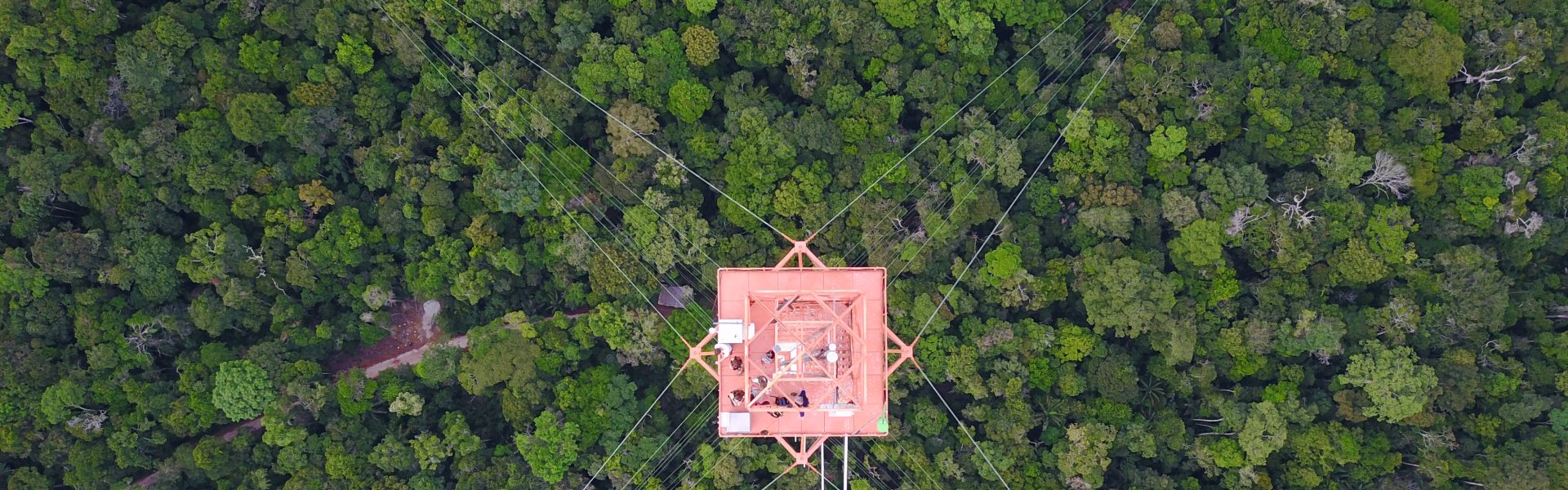
The Amazon Tall Tower Observatory (ATTO) is located near Manaus in a well-preserved location in the central Brazilian Amazon. As one of the few sites in the region providing carbon cycle in situ data, it served as an important benchmark for the large-scale datasets. “ATTO’s multi-faceted observations have made a significant contribution to understand how rainforests and adjacent regions respond to climate extremes,“ says Botia, ”thus giving us an idea of how the rainforest might respond to continued warming in the future.”