
Mirror image molecules reveal drought stress in the Amazon rainforest
New study by the Max Planck Institute for Chemistry shows: The ratio of certain forest scent molecules provides precise insights into the stress state of the rainforest.
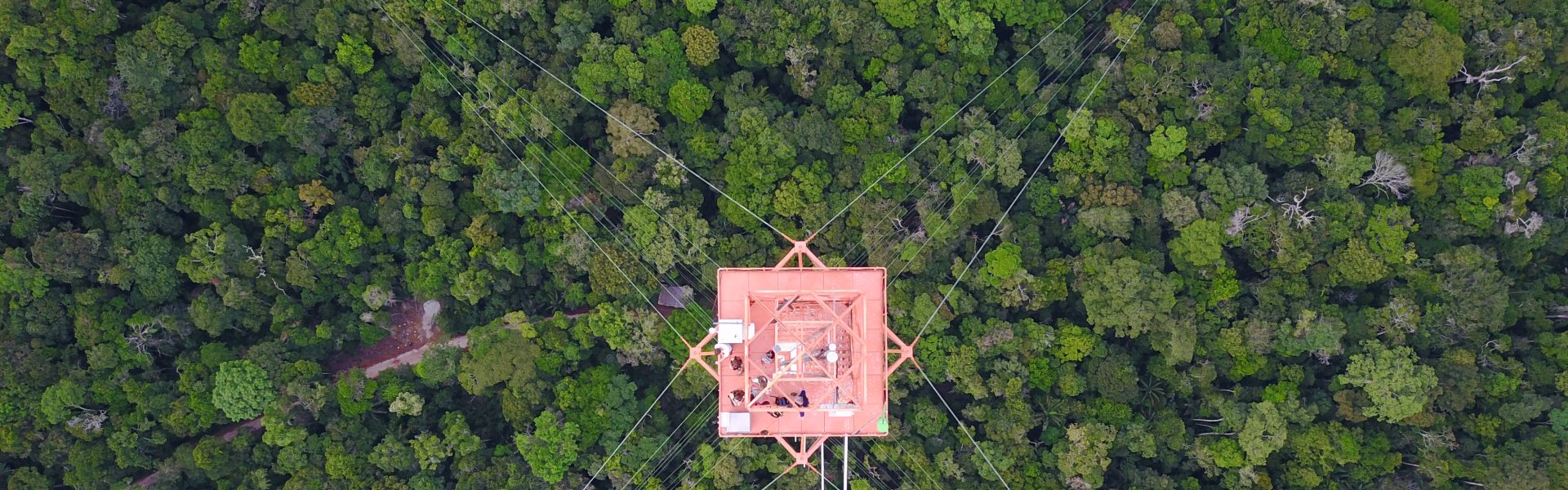
New study by the Max Planck Institute for Chemistry shows: The ratio of certain forest scent molecules provides precise insights into the stress state of the rainforest.
Atmospheric aerosol particles are essential for the formation of clouds and precipitation, thereby influencing the Earth’s energy budget, water cycle, and climate. However, the origin of aerosol particles in pristine air over the Amazon rainforest during the wet season is poorly understood. A new study reveals that rainfall regularly induces bursts of newly formed nanoparticles in the air above the forest canopy.
More soot particles enter the central Amazon rainforest from brush fires in Africa than from regional fires at certain times.
In a new study, Marco A. Franco and his colleagues analyzed when and under what conditions aerosols grow to a size relevant for cloud formation. Such growth events are relatively rare in the Amazon rainforest and follow and pronounced diurnal and seasonal cycles. The majority take place during the daytime, and during the wet season. But the team also discovered a few remarkable exceptions.
It is long known that aerosols, directly and indirectly, affect clouds and precipitation. But very few studies have focused on the opposite: the question of how clouds modify aerosol properties. Therefore, Luiz Machado and his colleagues looked into this process at ATTO. Specifically, they studied how weather events influenced the size distribution of aerosol particles.