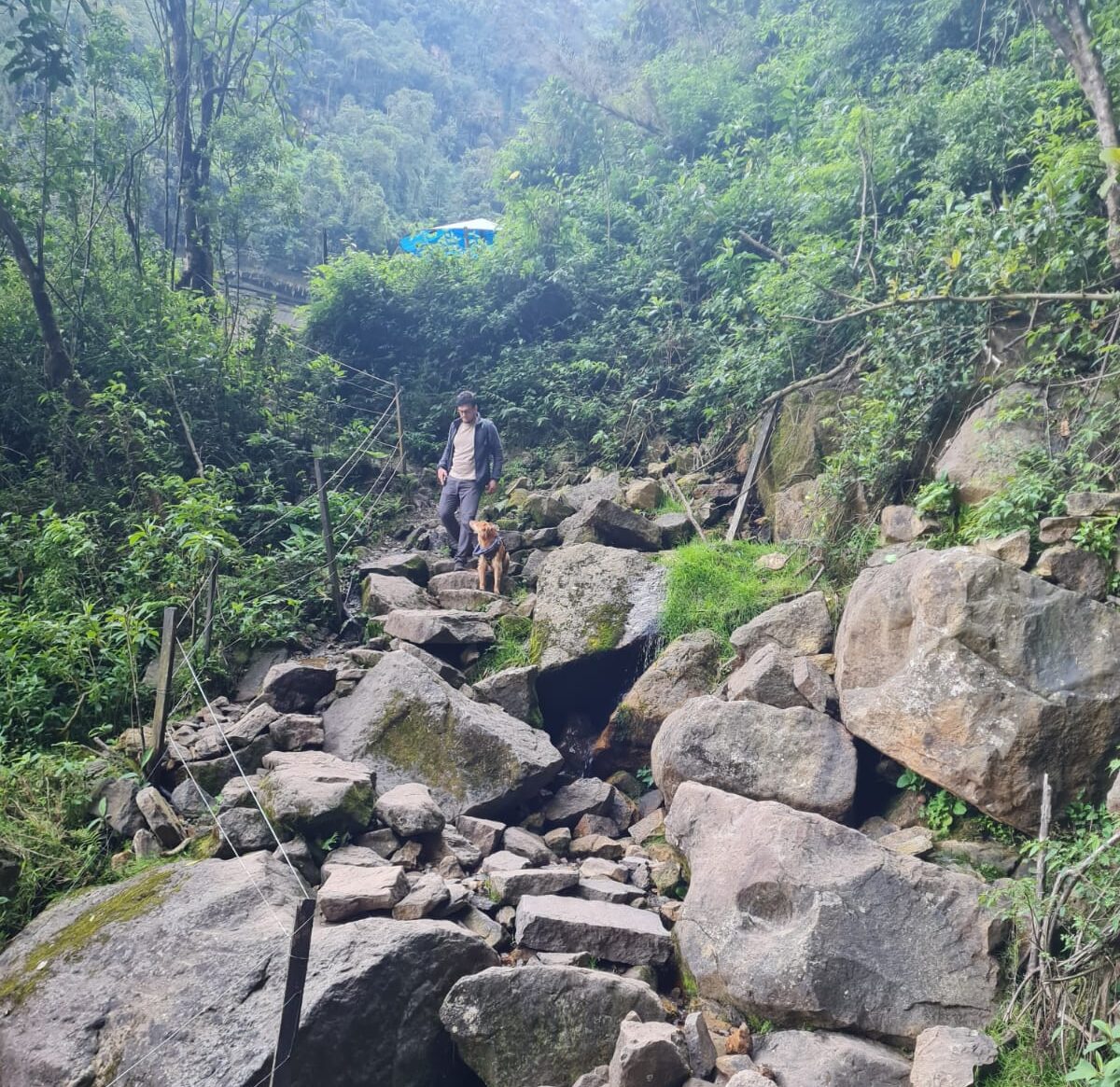
Hola! My name is Mario Cárdenas, and I am a PhD student in the Atmosphere-Biosphere Signal Attribution in the Tropics (BSAT) group at the Max Planck Institute for Biogeochemistry in Jena, Germany.
I have a background in ecology and hold a Master’s degree in Natural Sciences. My Master’s research focused on hydroclimatological relationships and causal interactions between vegetation indices and hydroclimatic variables. I looked at tropical forest ecosystems in South America, including regions with varying levels of disturbance. My work aims to understand how tropical ecosystems, particularly vegetation, respond to climate variability and environmental change.
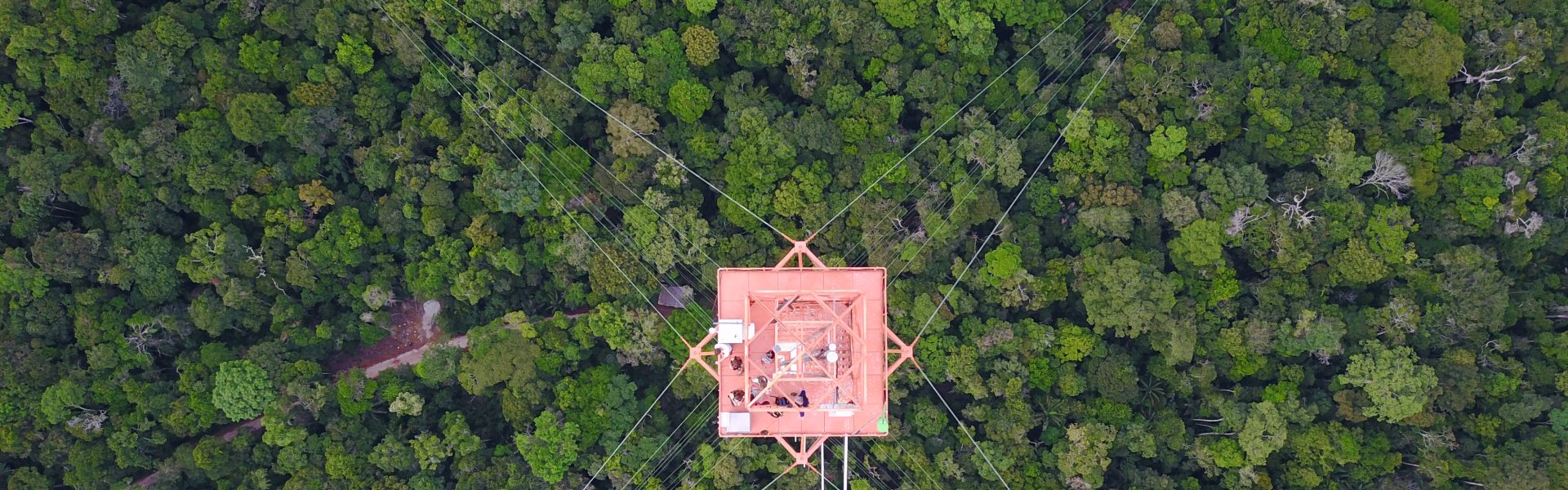
For my PhD, I focus on carbon dynamics in tropical South America, including the ATTO region. I estimate Net Ecosystem CO₂ Exchange and its components by integrating vegetation observations, biogenic flux estimates, atmospheric transport models, and inverse modelling. My goal is to improve understanding of how various ecosystems and land-cover types exchange CO₂ with the atmosphere, and how these exchanges vary across seasons, years, and disturbance gradients.
© private
I came to work with ATTO partly because I have long been fascinated by the Amazon, not only as an ecosystem but also as a place where ecology, climate, people, and history are deeply interconnected. I remember reading El Río (The River) by Wade Davis. What stayed with me was the complex beauty of the Amazonian forests and the ways the region has been shaped by rubber extraction, exploration, resource use, deforestation, and the lives of those connected to these landscapes. Since then, the Amazon has felt to me like much more than just a “study region”. So, working with ATTO felt like a very exciting way to approach it from the atmospheric and carbon-cycle perspective, while still keeping in mind that these forests are also tied to deep social and historical processes.